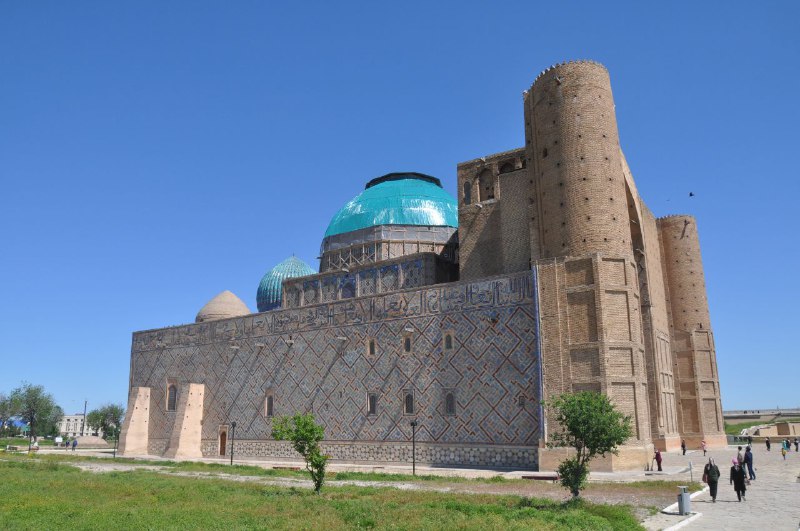
Kazakhstan wasn't exactly blessed with historical heritage: the whole country is just endless steppe, the Silk Road bypassed the Kazakhs entirely, and they themselves were constantly nomadic. But there is one ancient historical site: the Mausoleum of Ahmad Yasawi in Turkestan.
It's deeply revered by Central Asian Muslims (there's actually a whole collection of different mausoleums here, this is the most important one). Many even believe that before going on the hajj, you should first come here.
Recently, Turkestan got the status of regional capital, so major budget funding started flowing in. The entire territory is being excavated, and the mausoleum itself is surrounded by construction. Locals say they're preparing a burial site for Nazarbayev. Apparently he's getting on in years, and this kind of preparation takes time.
Telegram mirror
Telegram is a messenger where I post short travel notes. This page is a self-hosted backup of that channel.
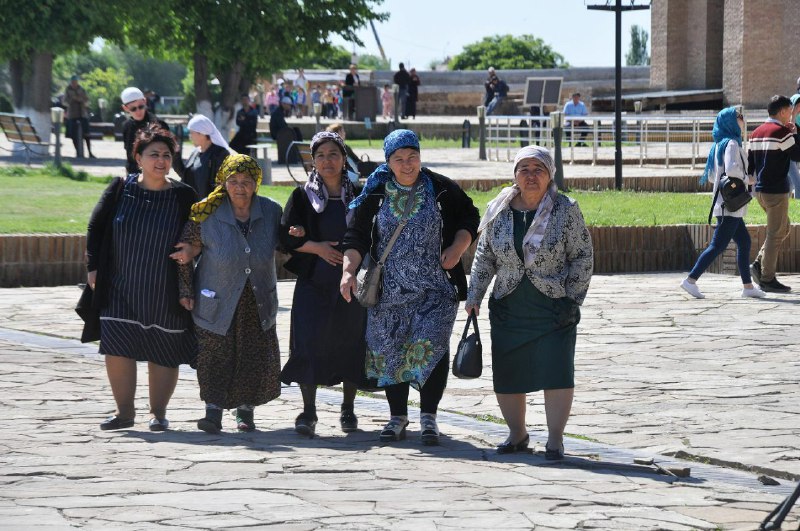
I've already written about fancy grandmas. Here's what it looks like (:
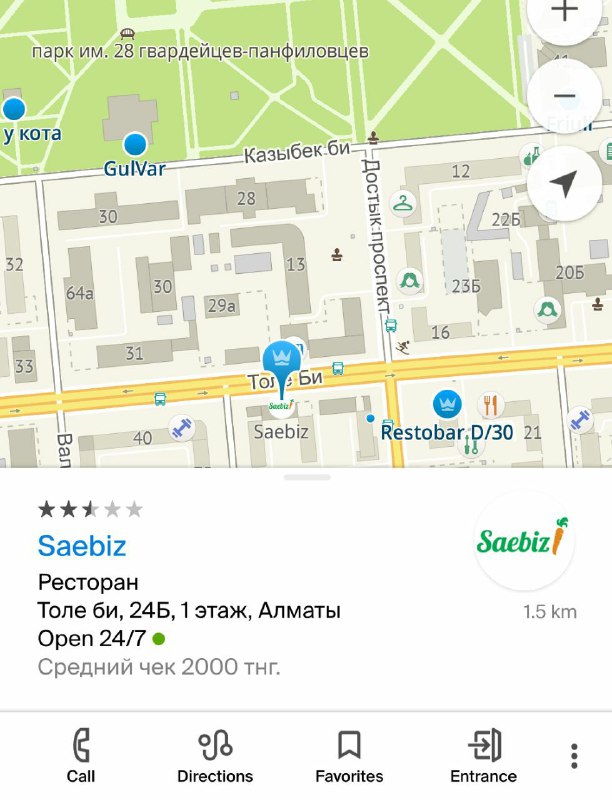
By 2025, Kazakhs are planning to completely switch from Cyrillic to Latin script. Which gives us some entertaining quirks. Although in the Cyrillic version it's an innocent "Sәbіz" (carrot 🥕) :)
Though for now the transition isn't very noticeable: practically all signs and announcements are still in Cyrillic. Often even road signs in Latin script don't have duplicates. Let's see what they end up with. The Azerbaijanis seem to have pulled it off.
Though for now the transition isn't very noticeable: practically all signs and announcements are still in Cyrillic. Often even road signs in Latin script don't have duplicates. Let's see what they end up with. The Azerbaijanis seem to have pulled it off.
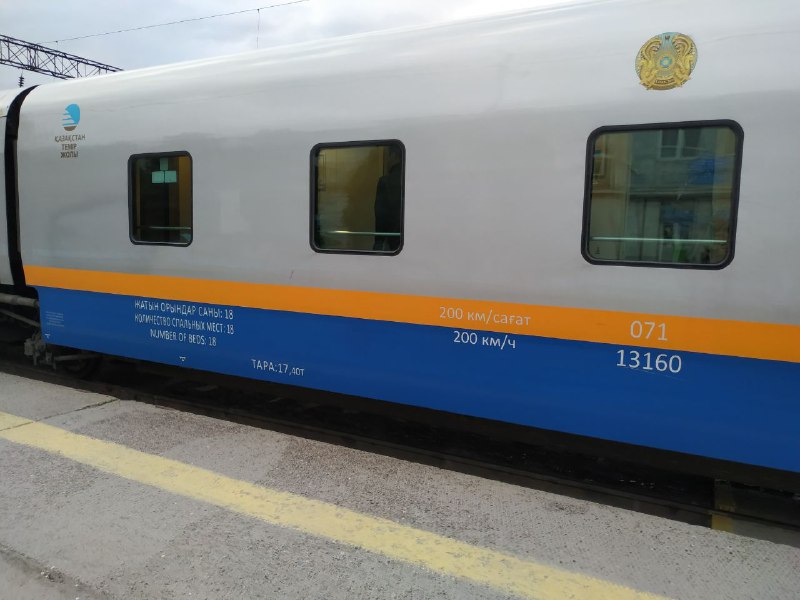
New Kazakh trains. Designed by Spaniards, assembled in Kazakhstan. Noticeably faster and more comfortable than their predecessors. For some reason, locals really pay attention to the fact that the doors are automatic, and if you're late, the train won't wait for you.
If you're lucky, you can snag a spot in a half-compartment: there are only 2 seats (lower and upper). But there's only one of these half-compartments per car.
Inside the car everything is good, but the designers clearly didn't try to sleep there: an insanely bright blue LED indicator light on the switch (one by each bunk) blinds you and keeps you awake.
But the railway website is just terrible. I managed to buy a ticket on the third try.
If you're lucky, you can snag a spot in a half-compartment: there are only 2 seats (lower and upper). But there's only one of these half-compartments per car.
Inside the car everything is good, but the designers clearly didn't try to sleep there: an insanely bright blue LED indicator light on the switch (one by each bunk) blinds you and keeps you awake.
But the railway website is just terrible. I managed to buy a ticket on the third try.
Preparing for the May 9th celebration. Although May 7th here is Defender of the Fatherland Day. Thankfully, there aren't parades as massive as the ones in Moscow here.
But practically every village has some kind of monument in memory of the war against the fascists. Even though the fighting didn't reach Kazakhstan, many Kazakhs were sent to the front back then.
But practically every village has some kind of monument in memory of the war against the fascists. Even though the fighting didn't reach Kazakhstan, many Kazakhs were sent to the front back then.
►
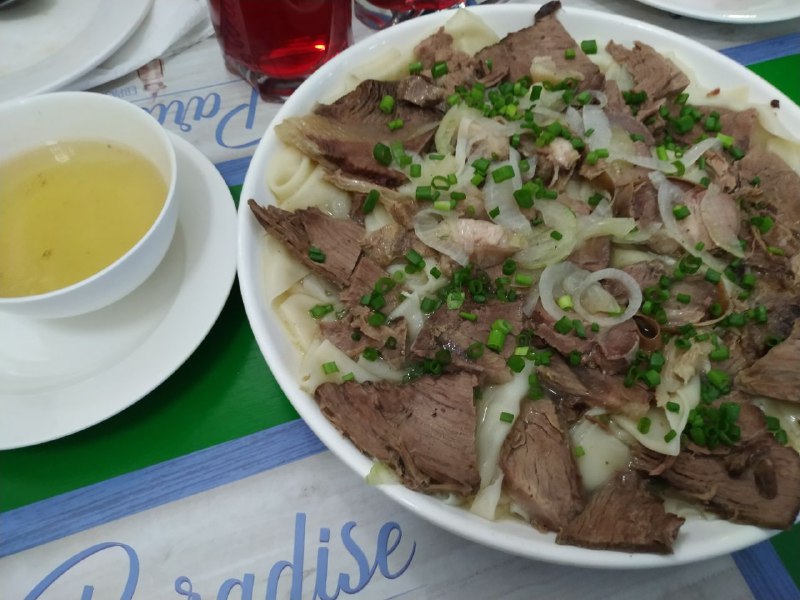
Since I'm already talking about food: here's what the most authentic beshbarmak looks like (essentially kazy and just horsemeat with pasta and broth). This is a portion for two people (actually a bit much). Delicious, but definitely not an everyday thing.
Kazakhs in general (like people in the East overall) really love to eat. So local cafeterias and restaurants don't suffer from a lack of customers. For good restaurants in the evening, you often need to book in advance, otherwise you won't get in. In some places, the whole queue situation is handled smoothly. They just hand you a number at the entrance and you wait until they call you.
Kazakhs in general (like people in the East overall) really love to eat. So local cafeterias and restaurants don't suffer from a lack of customers. For good restaurants in the evening, you often need to book in advance, otherwise you won't get in. In some places, the whole queue situation is handled smoothly. They just hand you a number at the entrance and you wait until they call you.
You'll often find open kitchens in Alma-Ata restaurants (either behind glass or completely open). If you're lucky, you'll get to watch how they prepare your order (:
The food, by the way, is tasty and often cheap. A bill for three people (a couple of salads, three main dishes, lemonade) comes out to around 1000 rubles.
But you need to be careful about choosing the right place. You can end up at a terrible spot with an expensive bill and tasteless food. Plus you won't even feel full. Overall, there's a rule that the more emphasis on local cuisine with Eastern interior design, the worse the cooking tends to be.
The food, by the way, is tasty and often cheap. A bill for three people (a couple of salads, three main dishes, lemonade) comes out to around 1000 rubles.
But you need to be careful about choosing the right place. You can end up at a terrible spot with an expensive bill and tasteless food. Plus you won't even feel full. Overall, there's a rule that the more emphasis on local cuisine with Eastern interior design, the worse the cooking tends to be.
►
На Зеленом базаре таки адекватные цены на казы. Ура! От 700 рублей за килограмм. Больше чем в 2 раза дешевле магазинной (!)
Сам рынок тоже очень колоритный. Настоящий восточный. Правда фрукты / овощи в основном привозные. Из Узбекистана (надо бы туда тоже как-нибудь доехать :) ).
Забавно что на рынке 2 этажа. На верхний (наземный) водят толпы иностранцев. Цены заметно выше, продавцы торгуются неохотно. А вот на нижнем (подземном), куда инстранцы не доходят, и цены демократичнее. И торгуются лучше (:
Сам рынок тоже очень колоритный. Настоящий восточный. Правда фрукты / овощи в основном привозные. Из Узбекистана (надо бы туда тоже как-нибудь доехать :) ).
Забавно что на рынке 2 этажа. На верхний (наземный) водят толпы иностранцев. Цены заметно выше, продавцы торгуются неохотно. А вот на нижнем (подземном), куда инстранцы не доходят, и цены демократичнее. И торгуются лучше (:
(translation pending)
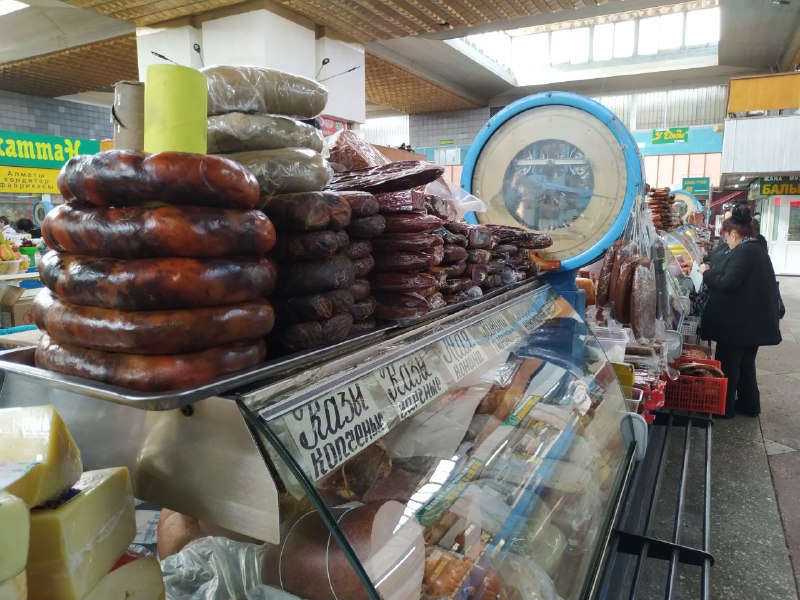
A rural Kazakh cemetery. Looks very unusual. They actually build entire crypts here. In recent years, people seem to have become a bit more relaxed about it.
The city cemetery is also a bit simpler, but the idea is roughly the same.
The city cemetery is also a bit simpler, but the idea is roughly the same.
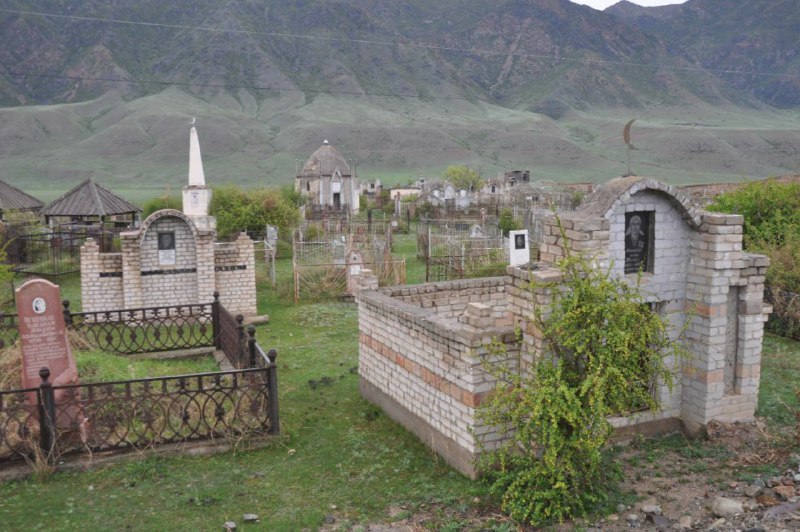
A glimpse of ethnography. Not far from Almaty, there's a small Uyghur village called Baiseit. According to a local legend, long, long ago the villagers asked God to give them happiness. And he granted their wish. Some time later, happiness began to leave, but it said it would definitely return.
Ever since, the locals always keep their gates or doors open when they're at home. So that when happiness returns, it won't find closed doors. And indeed, nearly everyone there keeps their gates wide open.
And if a traveler asks, they'll always give him a piece of bread and a glass of water.
Ever since, the locals always keep their gates or doors open when they're at home. So that when happiness returns, it won't find closed doors. And indeed, nearly everyone there keeps their gates wide open.
And if a traveler asks, they'll always give him a piece of bread and a glass of water.
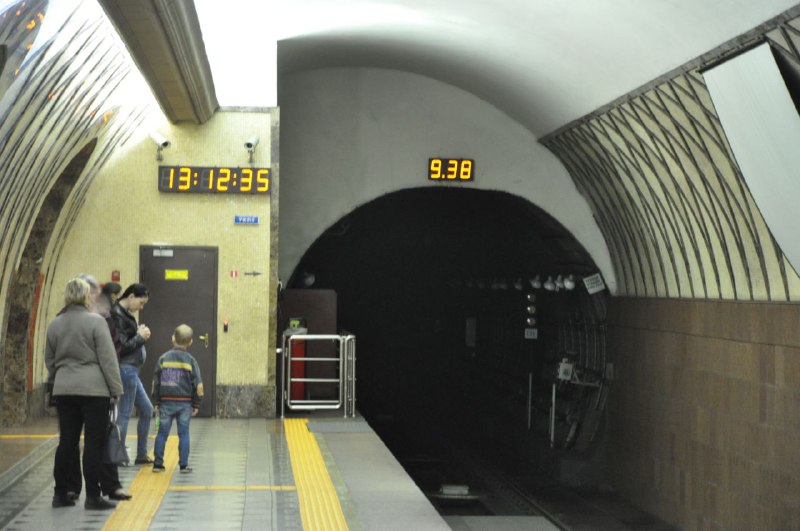
The metro in Almaty is quite unique. It's brand new—opened in 2011 (though construction actually started back in Soviet times). There's just one line that runs mostly through the center, only barely touching the beginning of the residential areas.
So on weekends it's completely empty. The wait between trains is over 10 minutes (on weekdays it's 7). And even with that interval, you can usually find an empty seat.
And it's worth remembering that this is a seismically active area. That's why the metro was built to much higher safety standards. But how it would actually hold up in a major earthquake is anyone's guess. This place has experienced 10-point earthquakes back in the early 1900s.
PS. There's a metro station here called "Moscow." That's payback for the Almaty station in Moscow :)
So on weekends it's completely empty. The wait between trains is over 10 minutes (on weekdays it's 7). And even with that interval, you can usually find an empty seat.
And it's worth remembering that this is a seismically active area. That's why the metro was built to much higher safety standards. But how it would actually hold up in a major earthquake is anyone's guess. This place has experienced 10-point earthquakes back in the early 1900s.
PS. There's a metro station here called "Moscow." That's payback for the Almaty station in Moscow :)
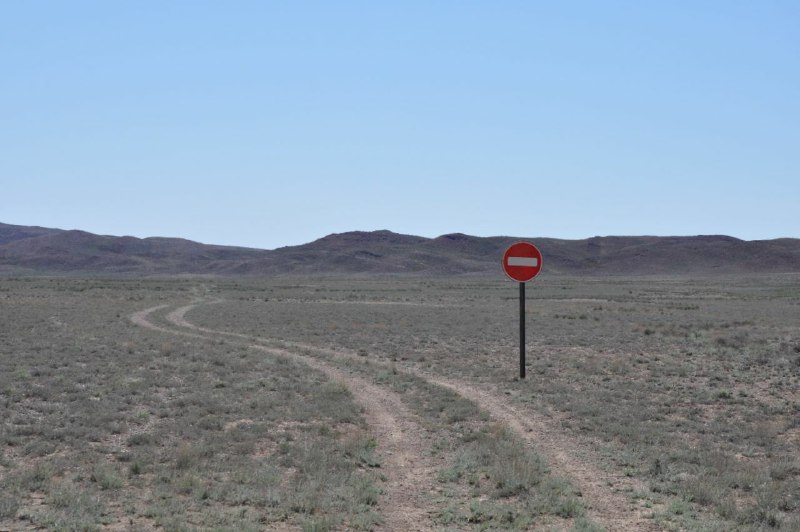
A brick in the steppe looks really interesting. And quite unusual :)
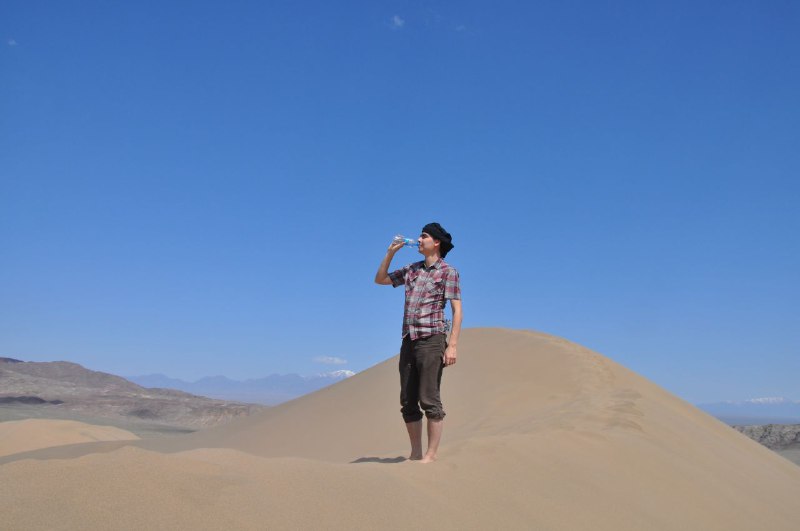
Another name for this dune is the Singing Barkhan. The sand here is incredibly fine, so when it shifts, you hear a quiet, pleasant humming sound. Plus, there's constant wind at the top that keeps changing the direction of the barkhan. The direction can be completely different in the morning versus the evening.
Two mountain ridges meet at one spot, but there's a small gap between them. And it's always windy there. Over time, sand accumulated and formed a huge dune (about 200m at its peak). And it's still growing.
The dune itself gave the park its name: Altyn-Emel — the Golden Saddle. According to legend, Genghis Khan himself came up with the name during a nearby encampment.
This is the only place in the park where tourists are brought by the busload. Although compared to US or European parks, the local crowds are pretty minimal. The park receives only about 15,000 (yes, 15 thousand) tourists per year.
The dune itself gave the park its name: Altyn-Emel — the Golden Saddle. According to legend, Genghis Khan himself came up with the name during a nearby encampment.
This is the only place in the park where tourists are brought by the busload. Although compared to US or European parks, the local crowds are pretty minimal. The park receives only about 15,000 (yes, 15 thousand) tourists per year.
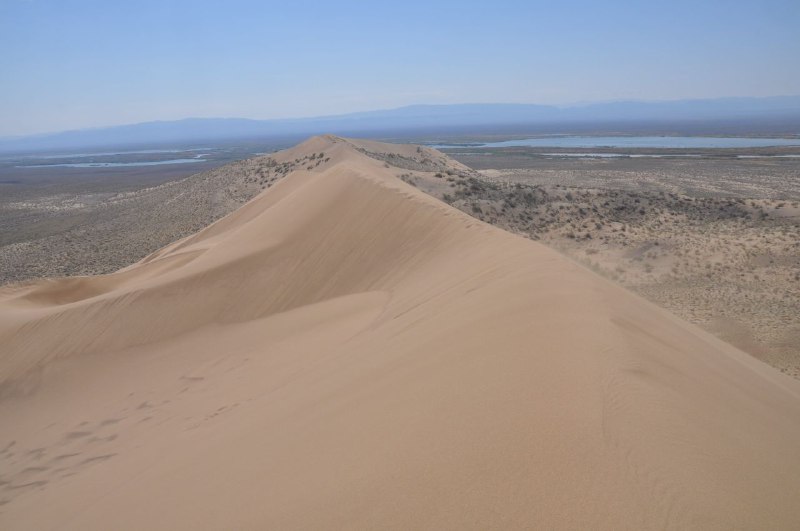
The mountains here are completely sandy. But you can see really well how everything was formed.
By the way, this place used to be an ocean floor. The water left long ago, but the white color is largely due to salt. And there's a ton of quartz here, seriously.
By the way, this place used to be an ocean floor. The water left long ago, but the white color is largely due to salt. And there's a ton of quartz here, seriously.
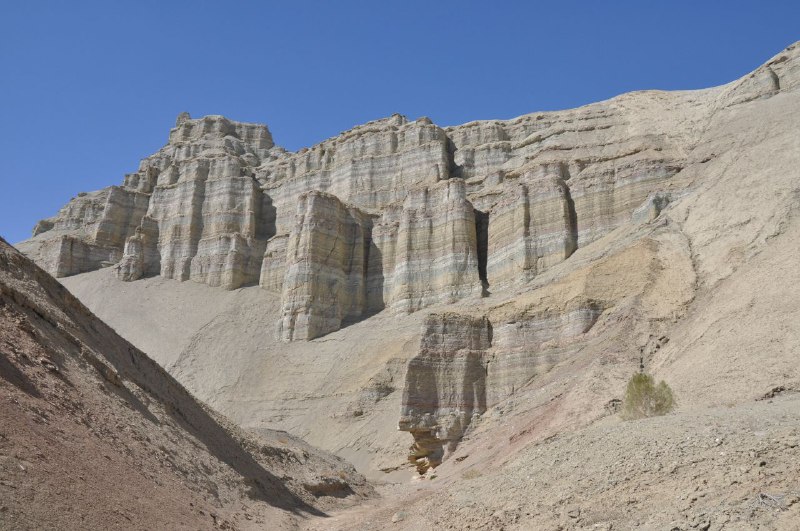
We got lucky with the weather. The forecast promised +16 and cloudy. In reality, it turned out to be +25 and sunny. Though just a week ago, it was raining heavily here.
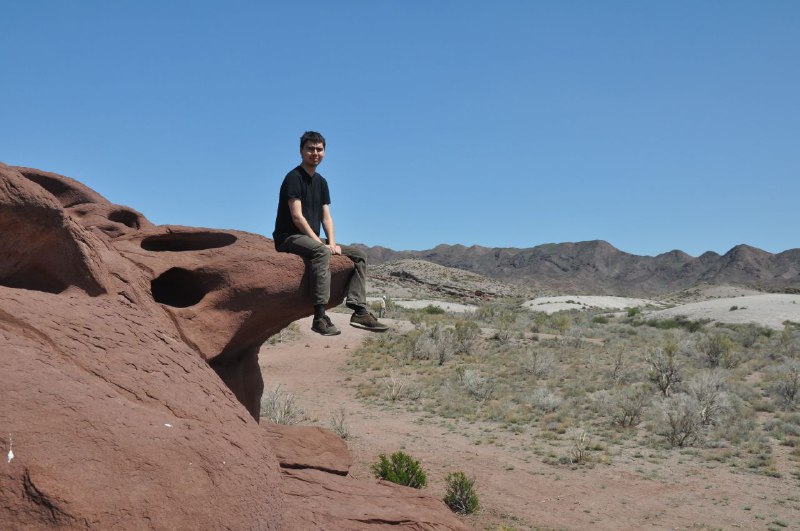
But what makes this national park special is that it's not just steppe. There are lots of rare animals here that are on the red list (gazelles, Przewalski's horses, and snow leopards, among others).
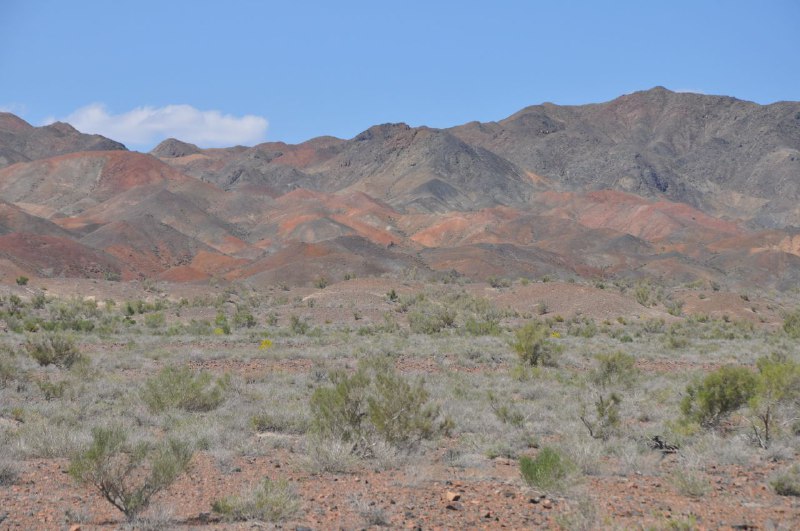
And mountains. Colorful ones and less colorful ones. With snow and without. In some places the elevation is over 4000m. But the area itself sits at roughly 1600-2000 meters above sea level.
Because of this, by the way, it can be really difficult for local residents to relocate, especially older folks: as people age, their bodies get used to the mid-mountain elevation, and a change in altitude can be quite painful.
And mountains. Colorful ones and less colorful ones. With snow and without. In some places the elevation is over 4000m. But the area itself sits at roughly 1600-2000 meters above sea level.
Because of this, by the way, it can be really difficult for local residents to relocate, especially older folks: as people age, their bodies get used to the mid-mountain elevation, and a change in altitude can be quite painful.
Suddenly Kazakh music. Rare is the wedding that goes without this song (:)
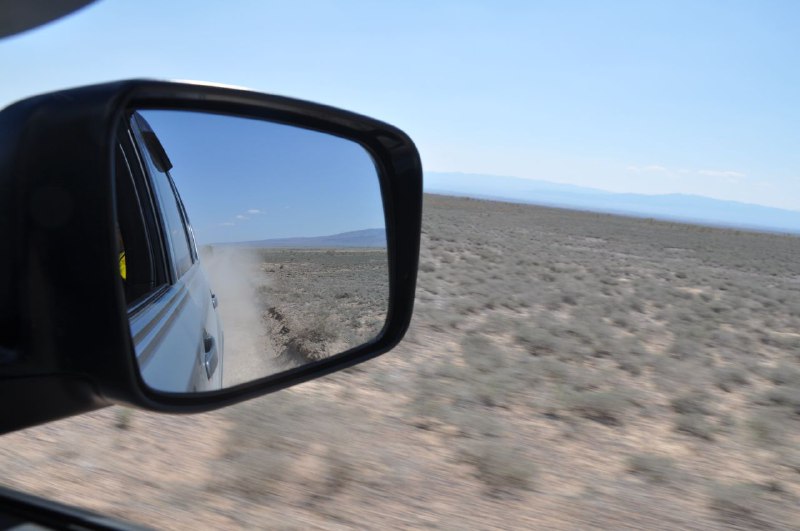
In dry weather, a huge long column of dust rises behind the car. That's why drivers maintain a distance of several hundred meters on such steppe roads. And if oncoming traffic suddenly appears, they slow down to let the dust settle.
Countries
 United Kingdom3
 Serbia100
 Bosnia and Herzegovina54
 Turkey42
 United Arab Emirates3
 Brunei2
 Indonesia12
 Malaysia15
 Argentina16
 USA117
 Morocco5
 Georgia5
 Egypt16
 Hong Kong8
 China4
 Vietnam9
 Tunisia7
 Montenegro9
 Philippines12
 Singapore10
 Oman12
 Algeria12
 North Macedonia5
 Lebanon11
 Israel27
 Albania17
 Russia63
 Tanzania50
 Netherlands7
 Spain14
 Latvia2
 Germany7
 Belgium3
 France27
 Kazakhstan32