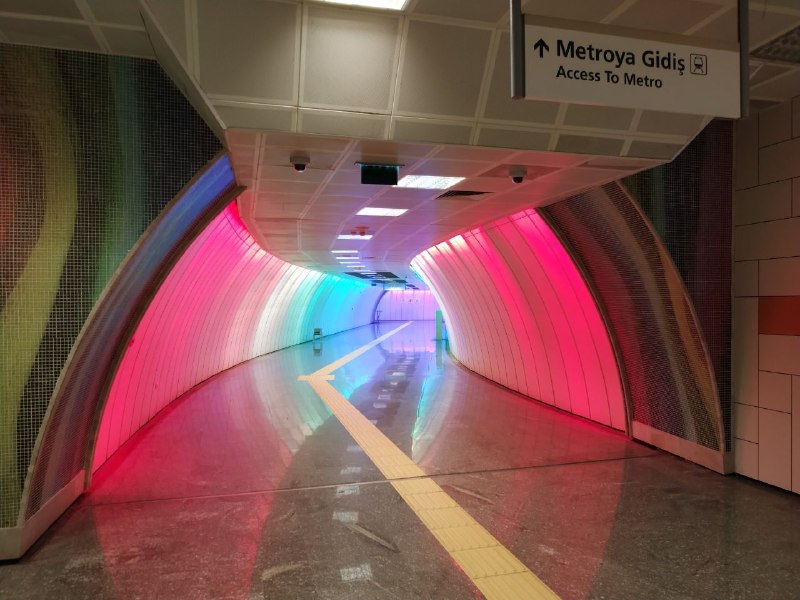
Metro transfer. Well, actually, only on one new line.
Transfers between lines are sometimes paid. A single ticket costs just over 20 rubles, but sometimes you need to make 2-3 transfers and the trip price skyrockets.
Telegram mirror
Telegram is a messenger where I post short travel notes. This page is a self-hosted backup of that channel.
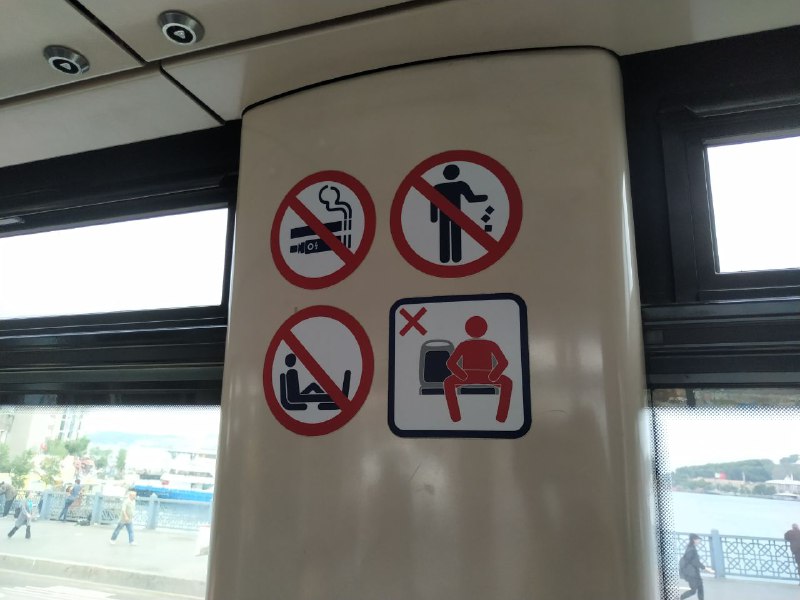
Public transport has a special sign that says you can't spread your legs wide. Moscow could really use more of these sometimes.
The passengers are super polite. I often see people instantly giving up their seats to women (especially those with kids) and elderly folks, without any hints or arguments needed. That's pretty cool.
The passengers are super polite. I often see people instantly giving up their seats to women (especially those with kids) and elderly folks, without any hints or arguments needed. That's pretty cool.
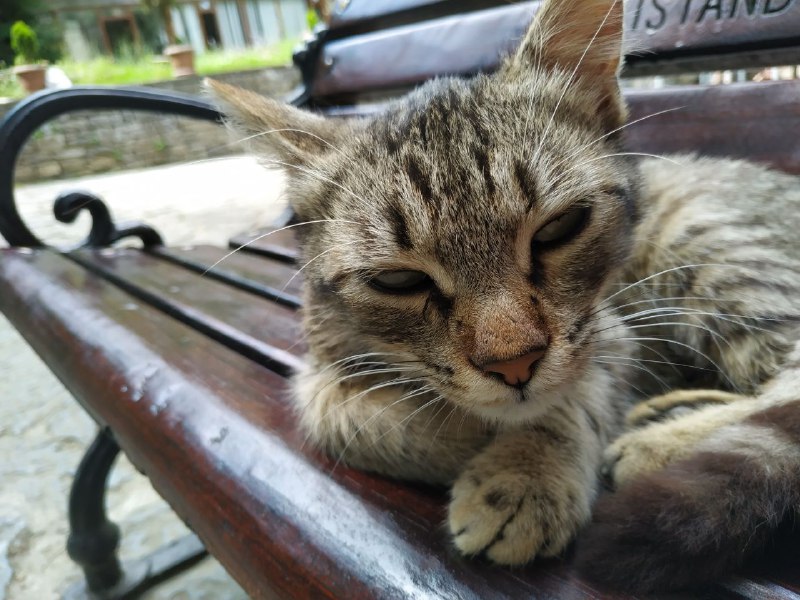
Crowds of cats roam all over the city. Many are not afraid of people at all: they give you hungry looks and beg for food. Especially at outdoor cafes.
By the way, there are also quite a few dogs running around the city. But no matter how many I've seen, they're all calm and chipped. City services keep an eye on them.
Cats on average live 1-2 years in the city. Not least because they become lunch for dogs.
By the way, there are also quite a few dogs running around the city. But no matter how many I've seen, they're all calm and chipped. City services keep an eye on them.
Cats on average live 1-2 years in the city. Not least because they become lunch for dogs.
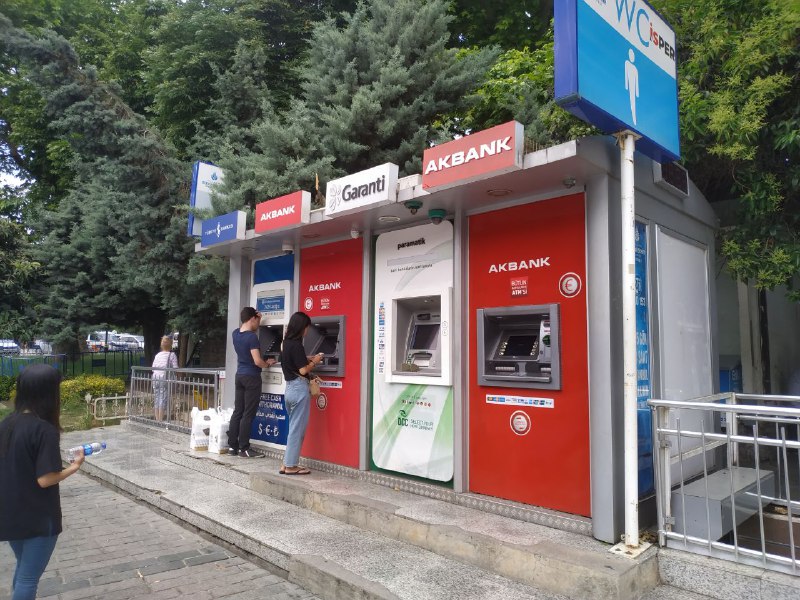
ATMs in Istanbul are a real nightmare. They charge an outrageous 6-7% commission for withdrawing local lira. Plus, they offer their own exchange rate, which is pretty unfavorable.
I was lucky to find a decent Ziraat bank ATM at the airport that didn't charge any commission at all. But those are few and far between – it's easier to find a currency exchange and swap some dollars you've saved up beforehand.
I was lucky to find a decent Ziraat bank ATM at the airport that didn't charge any commission at all. But those are few and far between – it's easier to find a currency exchange and swap some dollars you've saved up beforehand.
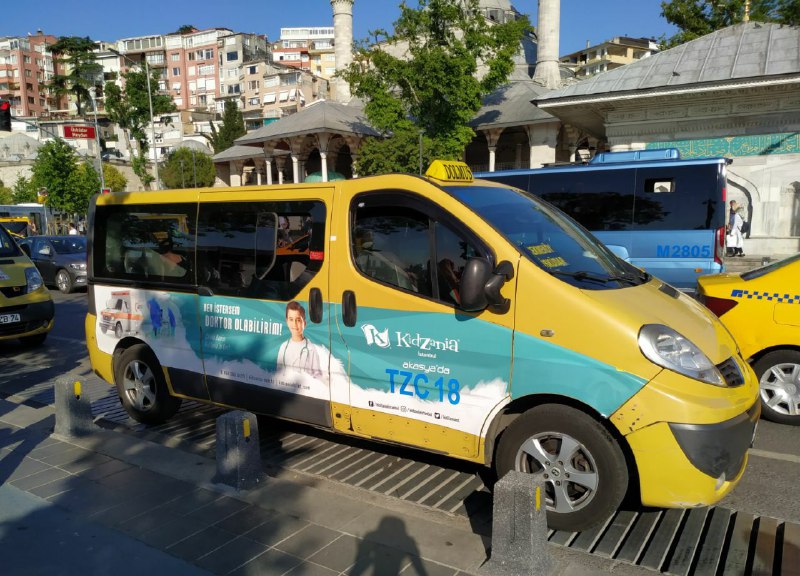
If anyone's feeling nostalgic for Moscow minibuses, they still exist in Istanbul :)
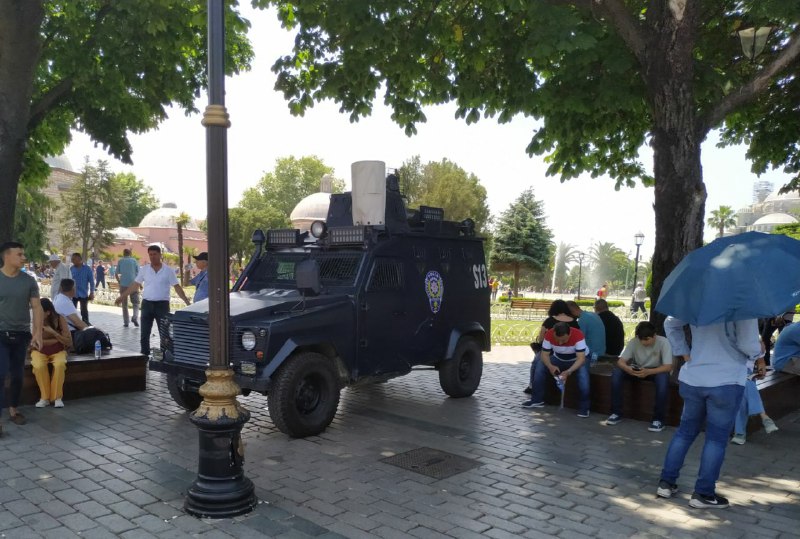
Around squares and open spaces, you can always find intimidating police vehicles, water cannons for dispersing protests, and police barriers. Just in case a crowd suddenly gathers to demonstrate, everything is already prepared. Near Taksim Square, where Turks love to protest, there's even a whole line of police vans parked. All for the people (:
You can grab fresh juice on every corner in Istanbul. But here's the thing – they display the most beautiful fruits in the window (gotta attract customers, right?), while the juice gets made from the more ordinary-looking ones. Turks really know how to set up an eye-catching display.
The prices seem pretty random though. Sometimes you'll see a 25-30% difference (!) between two juice stands right next to each other.
The prices seem pretty random though. Sometimes you'll see a 25-30% difference (!) between two juice stands right next to each other.
►
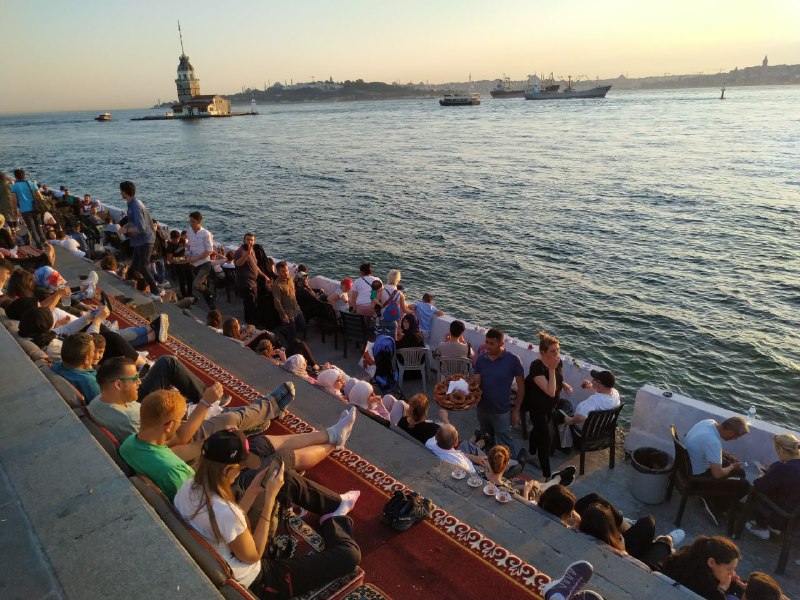
The Healthy Person's Waterfront.
By the way, this is the Asian side of the city. There are barely any tourists here. It's mostly locals hanging out. And there are so many of them. You can barely squeeze through. It's the weekend. Everyone's come out to relax.
By the way, this is the Asian side of the city. There are barely any tourists here. It's mostly locals hanging out. And there are so many of them. You can barely squeeze through. It's the weekend. Everyone's come out to relax.
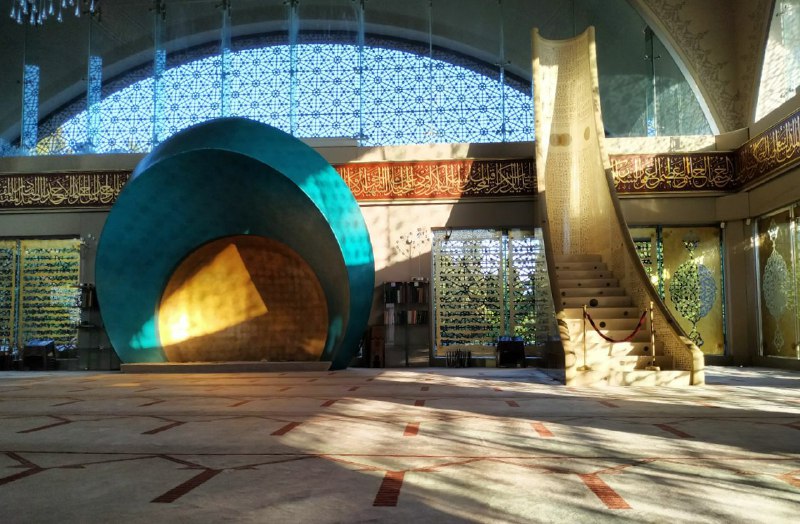
A mosque in modern architectural style. It looks really cool and unique: glass walls create an effect as if it's just an open structure. And plenty of light. It's great that Turks aren't afraid to experiment and try new trends.
This is what campaigning for a pro-government candidate looks like. Noticeably fewer people. And mostly women in headscarves.
►
Campaigning for the opposition candidate for Istanbul mayor.
Actually, he already won (by a margin of 23,000 votes), even managed to take office and worked for a whole month, but the current authorities didn't like the election results and the obliging court decided to annul them and hold new elections (June 23). Such democracy.
Actually, he already won (by a margin of 23,000 votes), even managed to take office and worked for a whole month, but the current authorities didn't like the election results and the obliging court decided to annul them and hold new elections (June 23). Such democracy.
►
This is how they lure hungry tourists to dinner at local cafes (:
►
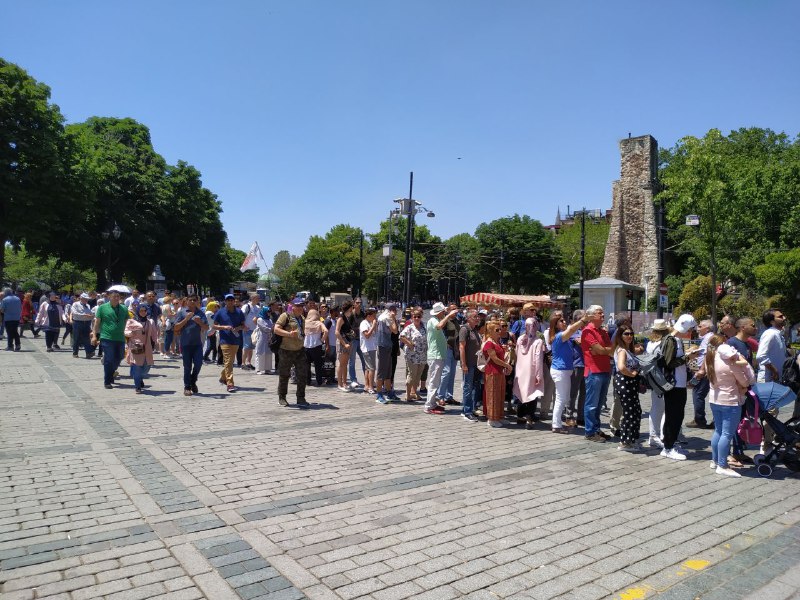
There are crazy lines everywhere. You can spend hours waiting. There's a life hack — buy an Istanbul museum card, but they don't sell it online. I had to wait in at least one line anyway. And it doesn't work for all the interesting places. On top of everything, it's super hot (::
Funny fact about internet censorship: Wikipedia is blocked in Turkey (actually, not just that). But if you replace wikipedia.org with 0wikipedia.org, everything opens up just fine.
Oh, this senseless and relentless war waged by the state against the internet.
Oh, this senseless and relentless war waged by the state against the internet.
Yay! Istanbul (:
Out of nowhere, a border guard at the Moscow exit decided to grill me: really wanted to know the purpose of my trip, asked me to show my return ticket. First time that's happened on the way out. Guess the combination of my name and destination seemed suspicious to them. Like I suddenly decided to move to Syria.
But on entry, they just stamped my passport in half a minute and let me through.
By the way, the Turks closed their old Atatürk Airport for civilian flights in April—the one you could reach the city from by metro. Now there's a huge new Istanbul Airport instead (one of the largest in the world by area), but it's a whole hour bus ride from there.
Out of nowhere, a border guard at the Moscow exit decided to grill me: really wanted to know the purpose of my trip, asked me to show my return ticket. First time that's happened on the way out. Guess the combination of my name and destination seemed suspicious to them. Like I suddenly decided to move to Syria.
But on entry, they just stamped my passport in half a minute and let me through.
By the way, the Turks closed their old Atatürk Airport for civilian flights in April—the one you could reach the city from by metro. Now there's a huge new Istanbul Airport instead (one of the largest in the world by area), but it's a whole hour bus ride from there.
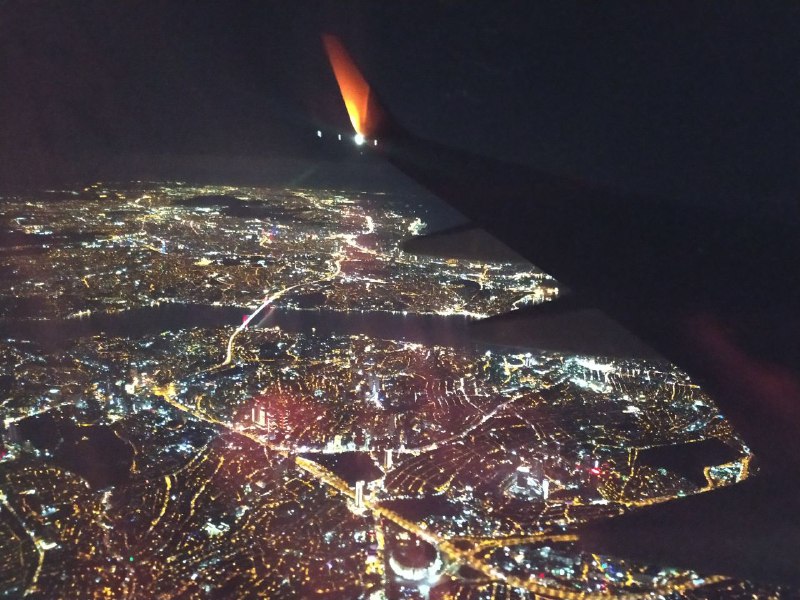
TIL: India has 0 rupee banknotes in circulation. They mimic the design and size of 50 rupee notes, except they're worth 0.
The banknotes are issued by a private organization as a response to the extremely high level of corruption in the country. When people are extorted, they hand over these banknotes as a sign that they have absolutely no intention of paying. Apparently, it actually works. Government officials stop trying to squeeze illegal money out of them.
Five other countries have followed the Indian example: Yemen, Ghana, Benin, Mexico, and Nepal. Looks like we should probably join in too (:
The banknotes are issued by a private organization as a response to the extremely high level of corruption in the country. When people are extorted, they hand over these banknotes as a sign that they have absolutely no intention of paying. Apparently, it actually works. Government officials stop trying to squeeze illegal money out of them.
Five other countries have followed the Indian example: Yemen, Ghana, Benin, Mexico, and Nepal. Looks like we should probably join in too (:
So at work, I suddenly got asked to help interview a ton of Indians, Mexicans, and various Bulgarians for hardcore devops guru positions. Since mid-April, we've done over 50 interviews (that's a lot).
A couple of interesting observations:
- On average, the ratio of top-tier specialists to the number of interviews doesn't depend on the country. It's pretty much the same everywhere: 1 solid person per 7-10 interviews. Even among Indians.
- Indians have noticeably more female candidates. Well, to be precise: we didn't get a single one from Bulgarians or Mexicans. But from Indians, 4 out of 20!
- Surprisingly, a lot of Mexicans really love to chat after the interview about random stuff like "oh, where are you from, what's your project, what time is it for you". If you don't stop them in time, it can go on for a while. Nobody else does this.
- The most technically strong candidate was from Bulgaria. Arguably, the strongest one I can remember from the past couple of years of interviews.
- One candidate suddenly launched into a speech at the end of the interview about how amazing he is (he's really not), how much he loves this kind of work (he almost teared up) and how he absolutely needs to be hired. I have no idea what he was expecting, but you just shouldn't do that.
A couple of interesting observations:
- On average, the ratio of top-tier specialists to the number of interviews doesn't depend on the country. It's pretty much the same everywhere: 1 solid person per 7-10 interviews. Even among Indians.
- Indians have noticeably more female candidates. Well, to be precise: we didn't get a single one from Bulgarians or Mexicans. But from Indians, 4 out of 20!
- Surprisingly, a lot of Mexicans really love to chat after the interview about random stuff like "oh, where are you from, what's your project, what time is it for you". If you don't stop them in time, it can go on for a while. Nobody else does this.
- The most technically strong candidate was from Bulgaria. Arguably, the strongest one I can remember from the past couple of years of interviews.
- One candidate suddenly launched into a speech at the end of the interview about how amazing he is (he's really not), how much he loves this kind of work (he almost teared up) and how he absolutely needs to be hired. I have no idea what he was expecting, but you just shouldn't do that.
Finally (to fully immerse yourself in Kazakhstan), here are a couple of recommendations.
To read (about the old days):
- The "Nomads" trilogy by Ilyas Esenberlin
To watch (about our time):
- The Old Man (2012) — I was impressed by the story itself, the quality of the cinematography, and the fact that it was made by Kazakhs.
- The Racketeer (2007) — but whatever you do, don't watch the second part, just trust me on this.
- The Needle (1988)
PS. Meduza recently wrote about Personal Growth Training. It's written interestingly, but I haven't had a chance to watch it myself yet.
To read (about the old days):
- The "Nomads" trilogy by Ilyas Esenberlin
To watch (about our time):
- The Old Man (2012) — I was impressed by the story itself, the quality of the cinematography, and the fact that it was made by Kazakhs.
- The Racketeer (2007) — but whatever you do, don't watch the second part, just trust me on this.
- The Needle (1988)
PS. Meduza recently wrote about Personal Growth Training. It's written interestingly, but I haven't had a chance to watch it myself yet.
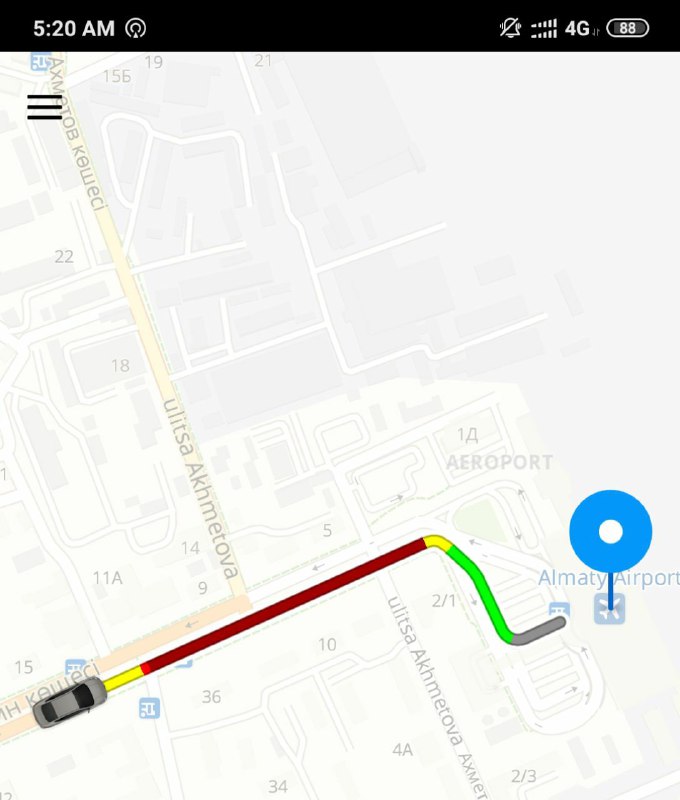
Didn't expect to hit a massive traffic jam at 5 AM on the way into the airport. Lost about 20 minutes stuck in a sea of cars. But managed to make it in time, yay (:️
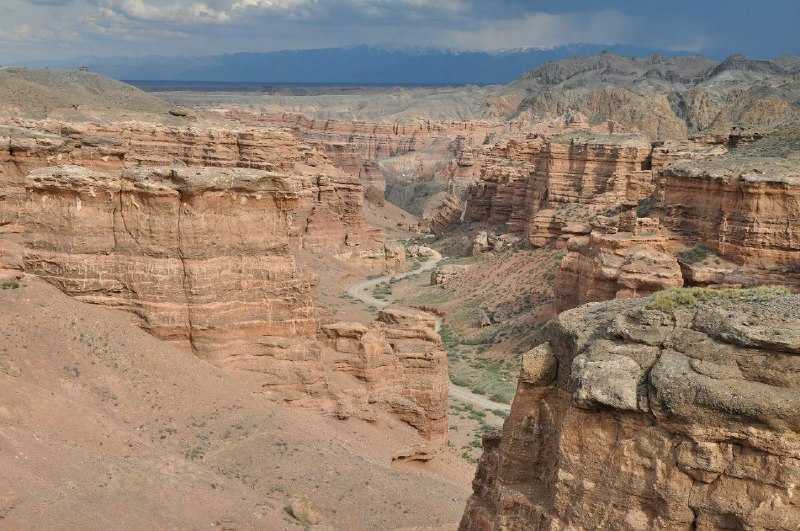
One of Kazakhstan's coolest places: Charyn Canyon. Kazakhs generally don't really care much for visiting spots like this. Right now they're bringing school groups here (and to Singing Dune). They especially like taking kids from rural areas. As for older folks, even those living nearby, a lot of them have never actually been here.
Countries
 United Kingdom3
 Serbia100
 Bosnia and Herzegovina54
 Turkey42
 United Arab Emirates3
 Brunei2
 Indonesia12
 Malaysia15
 Argentina16
 USA117
 Morocco5
 Georgia5
 Egypt16
 Hong Kong8
 China4
 Vietnam9
 Tunisia7
 Montenegro9
 Philippines12
 Singapore10
 Oman12
 Algeria12
 North Macedonia5
 Lebanon11
 Israel27
 Albania17
 Russia63
 Tanzania50
 Netherlands7
 Spain14
 Latvia2
 Germany7
 Belgium3
 France27
 Kazakhstan32