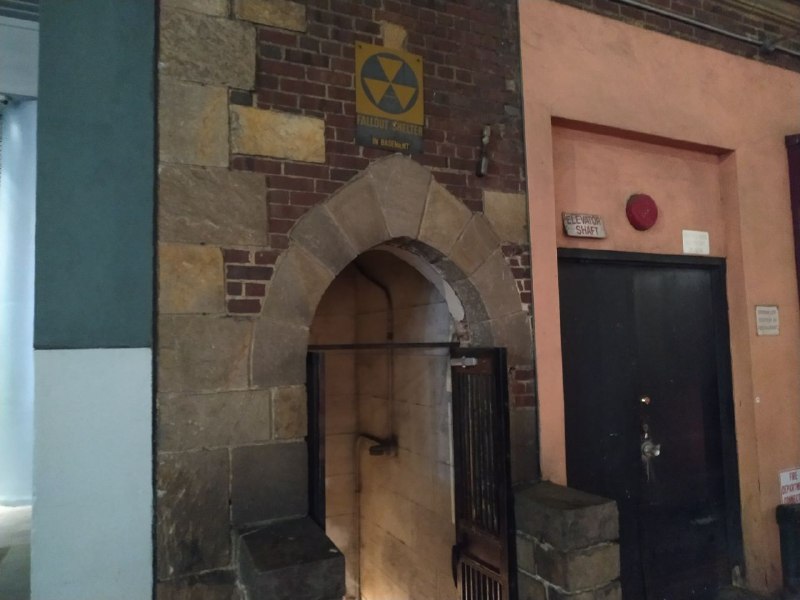
Stumbled upon a nuclear war fallout shelter! During the Cold War, the US took things seriously and actively built shelters in the 1960s to prepare for a Soviet attack. In New York alone, they planned to build enough shelters to accommodate over 11 million people (!). Looks like they didn't manage to build them all, but there are still thousands scattered throughout the city. And get this—until the mid-1970s, they actually maintained fresh food supplies in the already-built shelters. Then times changed, but the bunkers stayed put.
Can't say I spot them everywhere. I mean, I've only come across a couple. But apparently, nowadays a lot of them have just had their markings removed.
Telegram mirror
Telegram is a messenger where I post short travel notes. This page is a self-hosted backup of that channel.
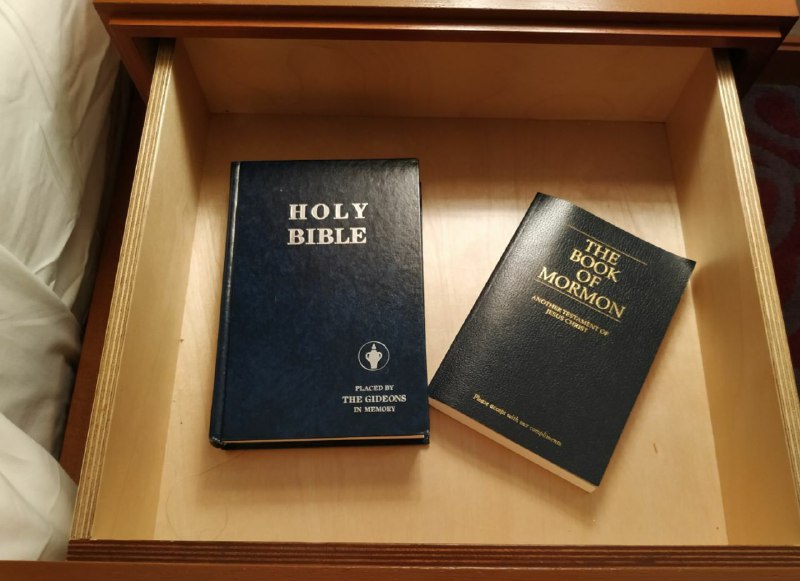
About 20 years ago, practically every hotel in the USA had a Bible in the room. Somewhere in the nightstand next to the bed. The Gideons Christian association has been distributing books since 1899. For free. But lately, hotels have been starting to refuse this practice. Already more than 20% of US hotels check guests into rooms without Bibles.
This time I was especially lucky though: as a bonus to the Bible, they put the Book of Mormon (:
This time I was especially lucky though: as a bonus to the Bible, they put the Book of Mormon (:
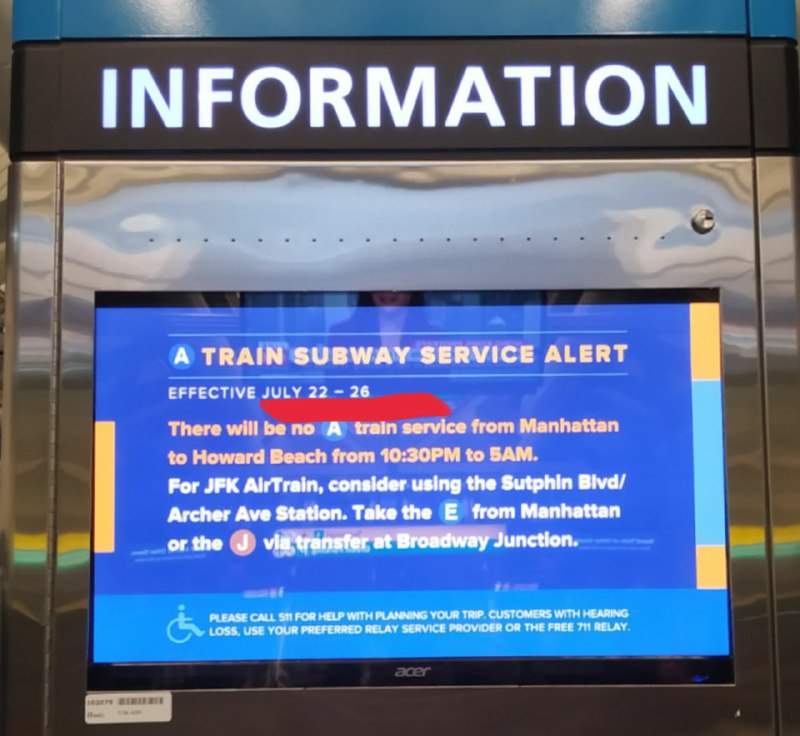
The metro trains are playing text announcements saying that begging is illegal (!) and if you really want to donate money, it's better to give it to a charity fund—that way you won't break the law and the money will be spent more wisely.
Plus, it's absolutely freezing in the metro cars. The air conditioning is working overtime. Except they only have it on the trains. At the stations, it's the opposite: unbearably hot and stuffy. You'd think you need fans just to survive. Even at night. And there are always plenty of homeless people around.
Plus, it's absolutely freezing in the metro cars. The air conditioning is working overtime. Except they only have it on the trains. At the stations, it's the opposite: unbearably hot and stuffy. You'd think you need fans just to survive. Even at night. And there are always plenty of homeless people around.
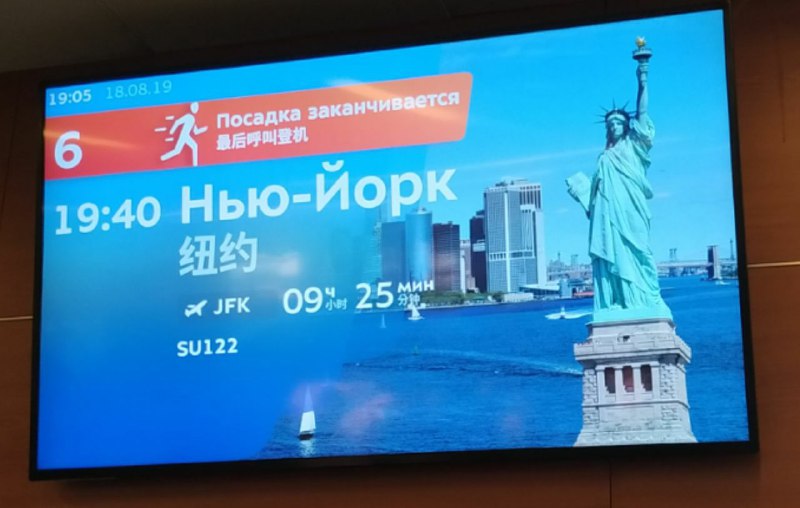
New York is behind us in time, sure, but only by like 7 hours (8 in winter). But this ad went stale like 3 weeks ago. Or maybe I'm missing something (:
ta-da :)
p.s. something lately they're turning on the "boarding ending" status right at the very beginning of boarding. why do that?
p.s. something lately they're turning on the "boarding ending" status right at the very beginning of boarding. why do that?
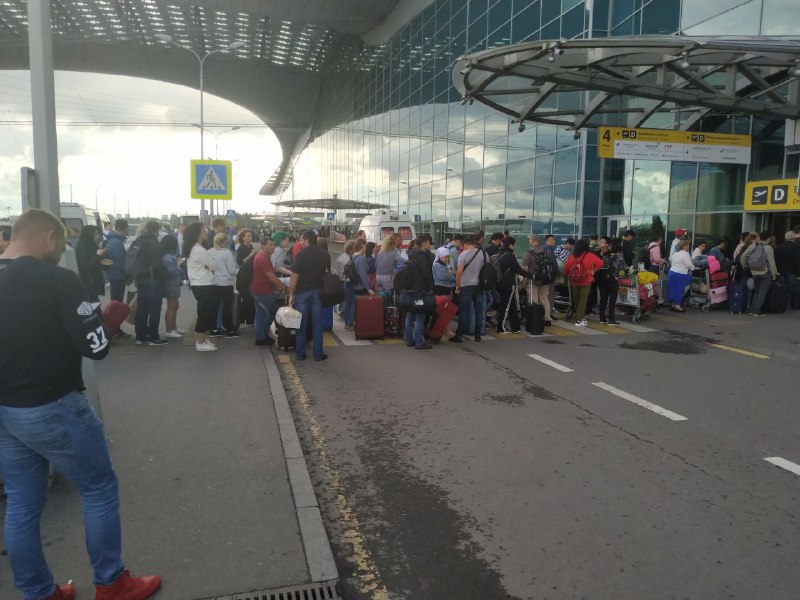
Sheremetyevo is a mess. 20 minute queue just to get into the terminal (!). Another 40 minutes to check baggage. The only thing that went smoothly was getting through border control. And even that was only because I happened to catch a window that had just opened up.
Good thing I arrived with some extra time.
Good thing I arrived with some extra time.
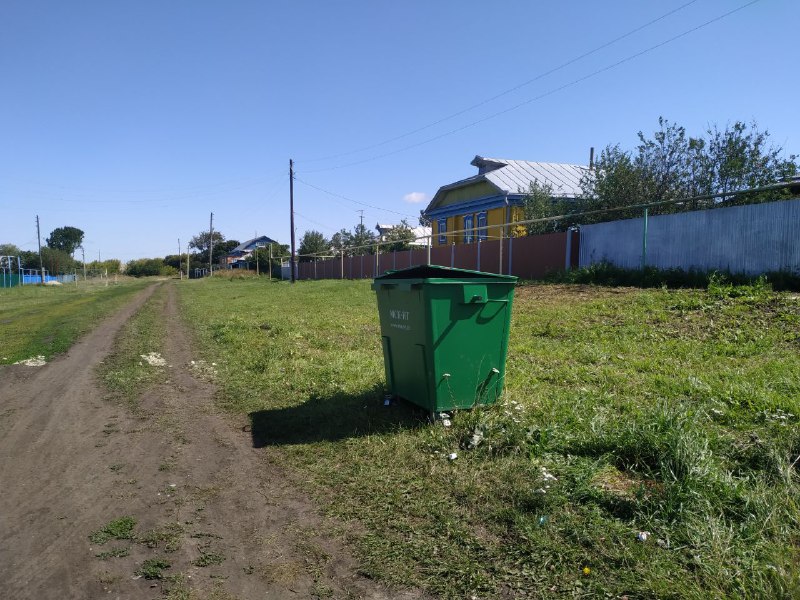
Back in 2018, civilization arrived in the form of centralized garbage disposal.
Before that, there was nothing like it. Apparently, it was expected that residents would haul all their trash to Sergach on their own. In reality, everything that could decompose went into a compost pit on the property, and everything else was hauled to a dump behind the highway, away from the village. Though locals did scavenge some of the waste—old machinery, metals, that sort of thing.
It's interesting to know where they take the garbage now. You'd like to think it's not just being dumped in some bigger pile.
Before that, there was nothing like it. Apparently, it was expected that residents would haul all their trash to Sergach on their own. In reality, everything that could decompose went into a compost pit on the property, and everything else was hauled to a dump behind the highway, away from the village. Though locals did scavenge some of the waste—old machinery, metals, that sort of thing.
It's interesting to know where they take the garbage now. You'd like to think it's not just being dumped in some bigger pile.
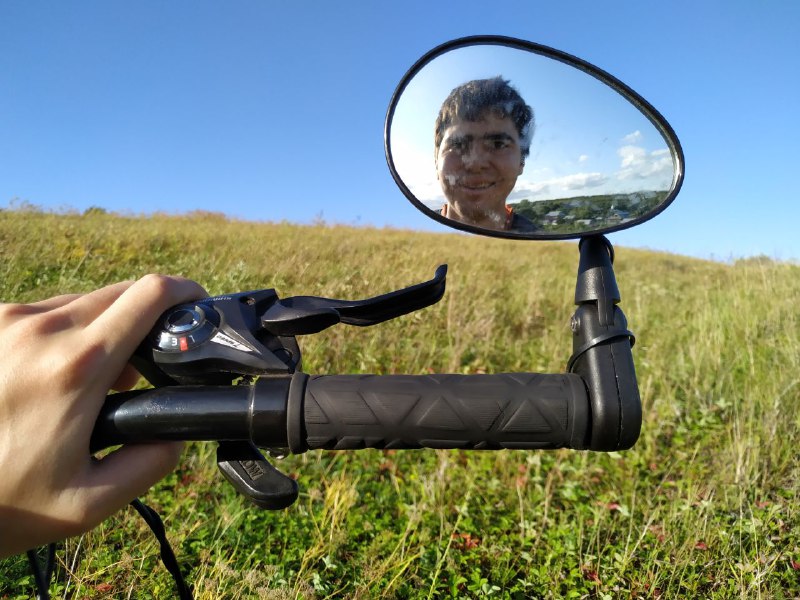
But you can have a blast biking around here. True, you'll inevitably have to carry your bike for part of the way because the climbs are way too steep. But you can still easily do day tours around the nearby villages for 40-50 km.
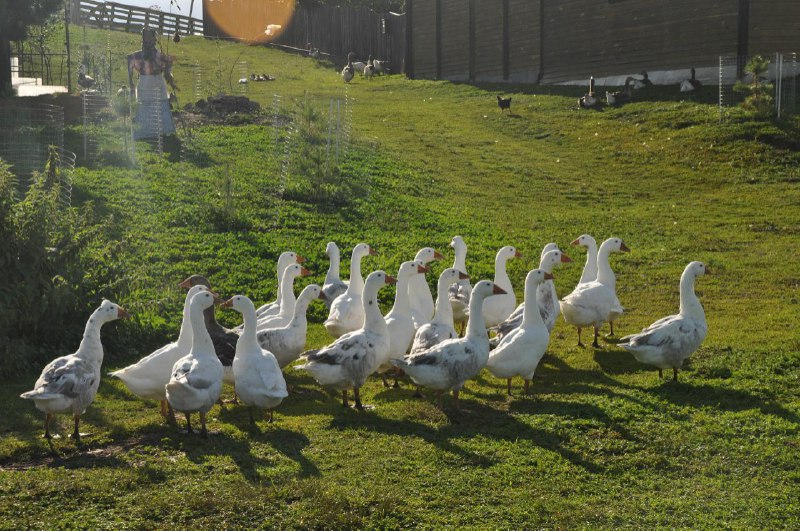
You'd think in a village, everyone would have their own livestock – a cow if not a sheep, or at least some kind of poultry.
But nope. A lot of locals have switched to store-bought products. It's just way easier that way. Hardly anyone keeps cows anymore. Everything comes from the farm.
Sigh, but back when I was a kid, t̶h̶e̶ ̶g̶r̶a̶s̶s̶ ̶w̶a̶s̶ ̶g̶r̶e̶e̶n̶e̶r̶ we'd get fresh warm milk from the neighbors every day in summer (:
But nope. A lot of locals have switched to store-bought products. It's just way easier that way. Hardly anyone keeps cows anymore. Everything comes from the farm.
Sigh, but back when I was a kid, t̶h̶e̶ ̶g̶r̶a̶s̶s̶ ̶w̶a̶s̶ ̶g̶r̶e̶e̶n̶e̶r̶ we'd get fresh warm milk from the neighbors every day in summer (:
Local customs and traditions can be quite interesting in how they differ from city life.
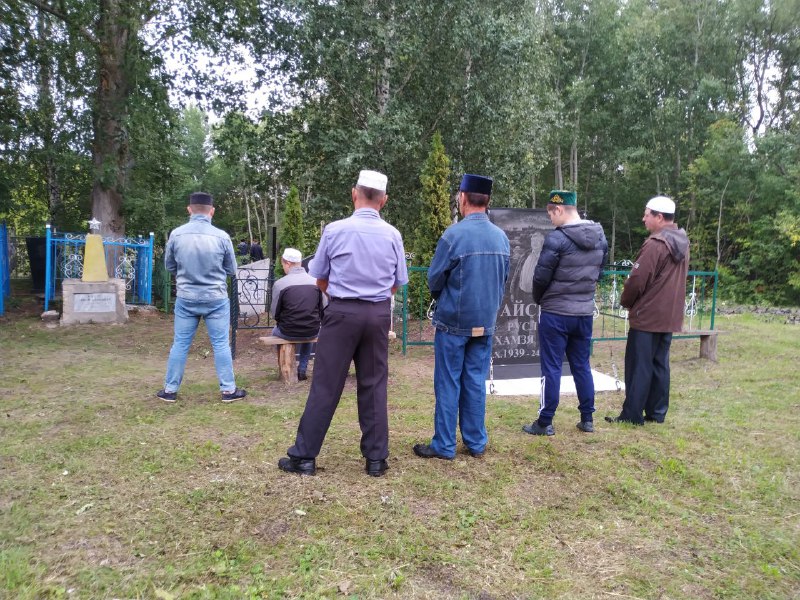
In Moscow, for Eid al-Adha (or other major religious holidays), people simply come to the mosques around 9 in the morning, pray together, and then leave.
In the village, everything starts before 6 in the morning. People gather, pray together, and then go to the cemetery to visit their relatives' graves.
When guests are entertained, dishes are served in an unusual order. In the city, it's always first course, second course, then tea with pastries. Here, they start with sweet tea, then soup and meat.
In Moscow, for Eid al-Adha (or other major religious holidays), people simply come to the mosques around 9 in the morning, pray together, and then leave.
In the village, everything starts before 6 in the morning. People gather, pray together, and then go to the cemetery to visit their relatives' graves.
When guests are entertained, dishes are served in an unusual order. In the city, it's always first course, second course, then tea with pastries. Here, they start with sweet tea, then soup and meat.
A dose of harsh reality.
On my way from Sergach (where the train station is) to the village (25 km), I got chatting with the taxi driver. He tells me that over 3 years, Sergach's population has shrunk from 25,000 to 20,000: the elderly are dying, and young people are leaving.
The only production facility that's somehow holding on is the sugar factory. Everything else has either already collapsed or is on its last breath.
A good salary is considered to be around 15,000 rubles a month. And people are clinging to that money. If someone's lucky enough to get 20-25k, it means working at 150% capacity.
If conditions are tough or they're forced to do extra work, people just endure it. Few are ready to simply write a resignation letter: it's hard to find another job, and nobody wants to starve.
The only ones doing noticeably better are the managing officials of local authorities (who would've thought).
In towns closer to Nizhny Novgorod, things are better: there are still investors from the big city willing to put money in and actually do something. But here it's complete backwoods. There's no interest.
On my way from Sergach (where the train station is) to the village (25 km), I got chatting with the taxi driver. He tells me that over 3 years, Sergach's population has shrunk from 25,000 to 20,000: the elderly are dying, and young people are leaving.
The only production facility that's somehow holding on is the sugar factory. Everything else has either already collapsed or is on its last breath.
A good salary is considered to be around 15,000 rubles a month. And people are clinging to that money. If someone's lucky enough to get 20-25k, it means working at 150% capacity.
If conditions are tough or they're forced to do extra work, people just endure it. Few are ready to simply write a resignation letter: it's hard to find another job, and nobody wants to starve.
The only ones doing noticeably better are the managing officials of local authorities (who would've thought).
In towns closer to Nizhny Novgorod, things are better: there are still investors from the big city willing to put money in and actually do something. But here it's complete backwoods. There's no interest.
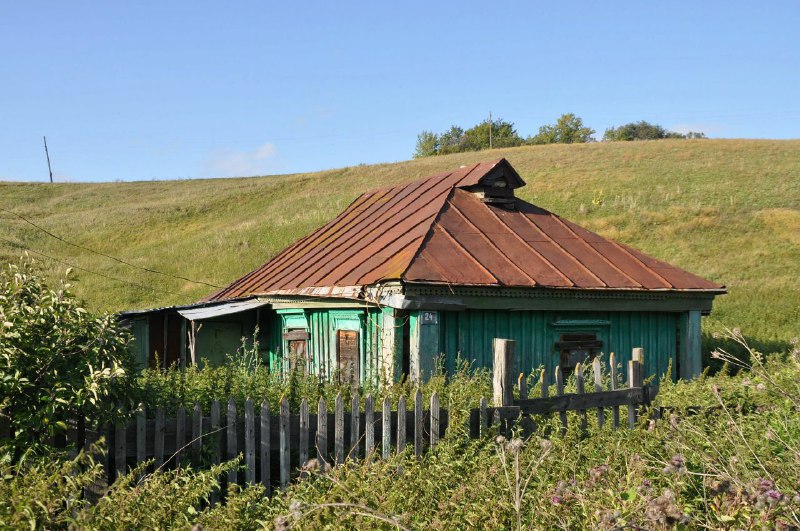
What do you do when a road needs to be repaired but there's not enough money in the budget (or some of it "went missing" along the way)?
Just lay down one lane! Preferably in the middle. And don't remove the old asphalt to save money (that's what you see on the edges).
Just lay down one lane! Preferably in the middle. And don't remove the old asphalt to save money (that's what you see on the edges).
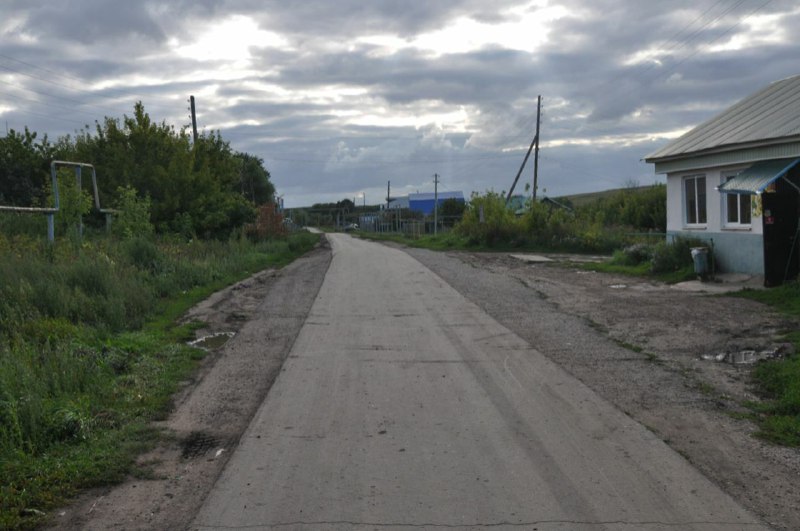
While they're jamming cell service at Moscow protests, let me tell you what it's like just 650km from the capital.
The terrain is hilly with elevation changes of a hundred meters or more. As a result, you can only get a decent signal (== calls + working internet) at the top of a hill. Move 15-20 meters away from the highest point and the internet just disappears. In the valleys, there might be no signal at all. But people live there too.
Your battery drains way faster with this kind of network. Even with the internet turned off.
The same situation isn't just here, but in dozens of villages around the area.
The terrain is hilly with elevation changes of a hundred meters or more. As a result, you can only get a decent signal (== calls + working internet) at the top of a hill. Move 15-20 meters away from the highest point and the internet just disappears. In the valleys, there might be no signal at all. But people live there too.
Your battery drains way faster with this kind of network. Even with the internet turned off.
The same situation isn't just here, but in dozens of villages around the area.
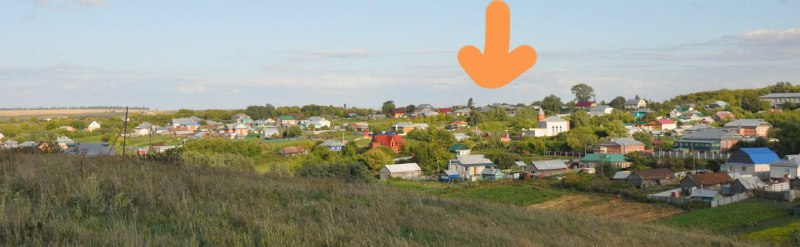
Pitza Village. The name comes from the river of the same name and is considered to be a Mordvin word meaning "pine". Though the river has almost dried up by now.
And the population has shrunk too. A hundred years ago, over 2,000 people lived here. Now it's less than 350.
PS. I live right under the arrow (:
And the population has shrunk too. A hundred years ago, over 2,000 people lived here. Now it's less than 350.
PS. I live right under the arrow (:
If you ask me, that's a win: the weather is definitely better, and the sun's even peeking out here and there. The wind is pretty strong though.
PS. I'm not sure how to photograph this place properly. The fields are too wide to fit in the frame to capture how it actually feels in person.
PS. I'm not sure how to photograph this place properly. The fields are too wide to fit in the frame to capture how it actually feels in person.
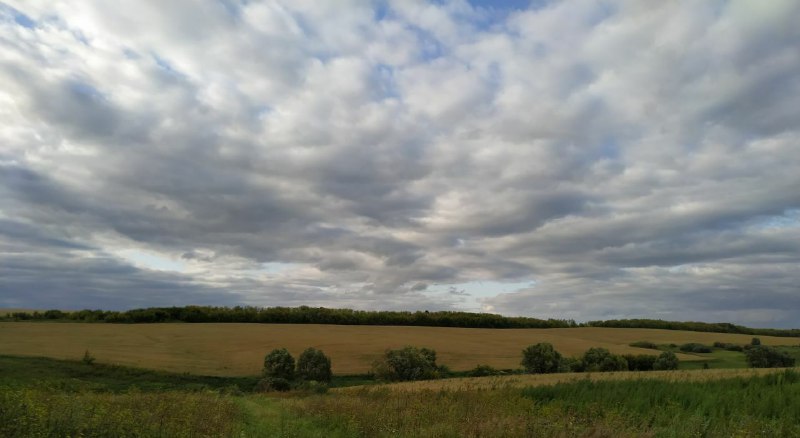
The weather in Moscow has been pretty awful lately. I'm gonna take off for a few days and hope it clears up :)
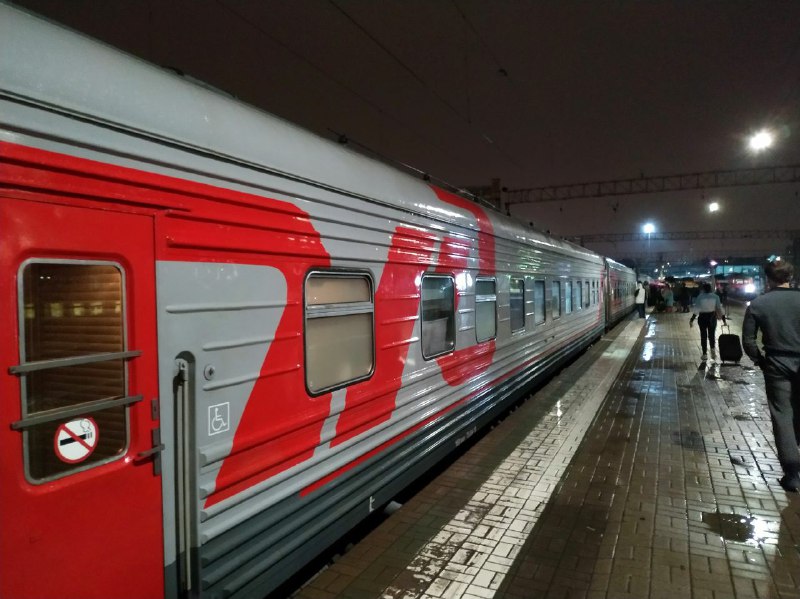
Sabantuy in Kolomenskoye. There's lots of interesting stuff there and the food is amazing. Go check it out right now (:
►
Istanbul has so many world-famous landmarks. They're genuinely amazing. But then you find out how long they took to build, and it completely blows your mind: the Hagia Sophia was built in 5 years (532-537), the Blue Mosque in 7 years (1609-1616), and Rumeli Castle in just 4.5 months (1451). And somehow they still haven't fallen apart. Compared to European building speeds, they basically get everything done instantly here.
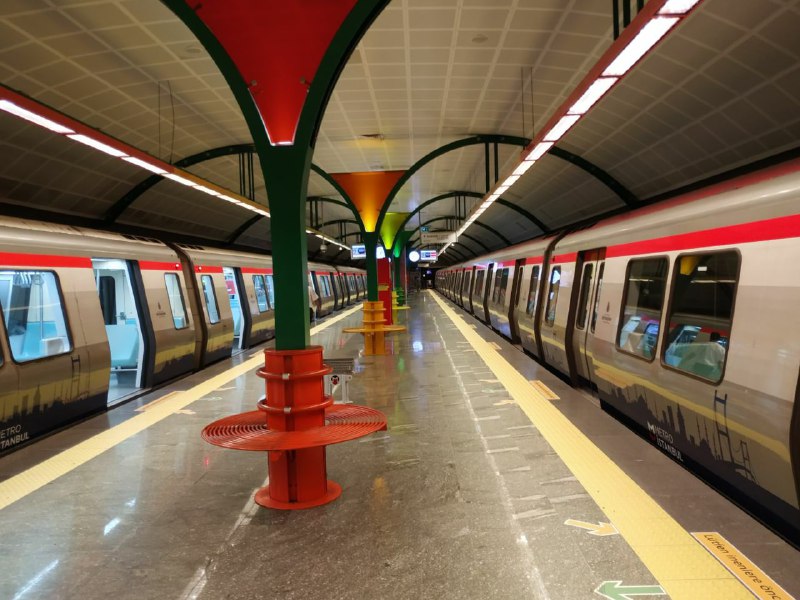
A few years ago, the Turks laid a tunnel along the bottom of the Bosphorus (they didn't dig under the strait, they just ran it like a pipe). Now the European and Asian parts are connected not only by ferries and buses, but also by metro.
On this line, you can really feel the smell of dampness (unpleasant, really). And the fare is 2 times more expensive than on a regular line. But it's fast. Waiting for a ferry takes longer.
On this line, you can really feel the smell of dampness (unpleasant, really). And the fare is 2 times more expensive than on a regular line. But it's fast. Waiting for a ferry takes longer.
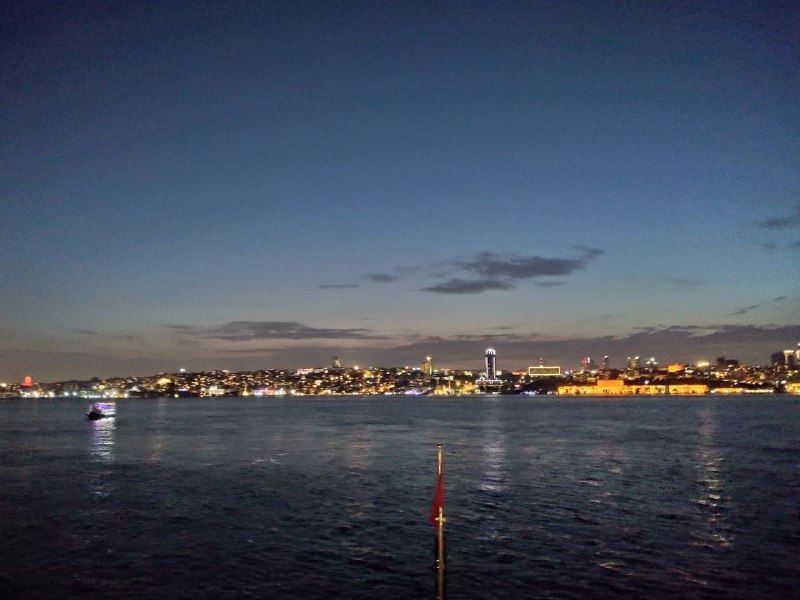
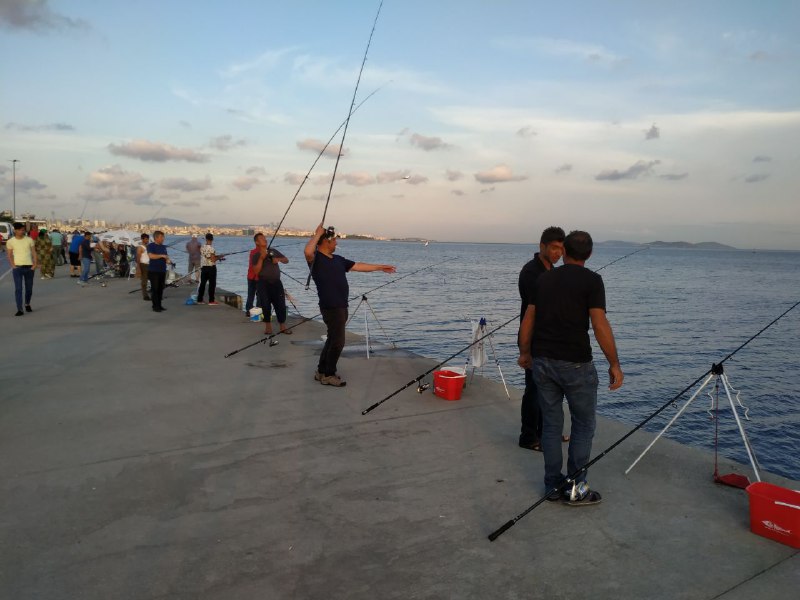
As evening approaches, locals love to head down to the Bosphorus Strait to fish. Surprisingly, many of them actually catch something.
There are so many fishermen that tackle and bait sellers show up too. Why miss out on such a great business opportunity (:
There are so many fishermen that tackle and bait sellers show up too. Why miss out on such a great business opportunity (:
Countries
 United Kingdom3
 Serbia100
 Bosnia and Herzegovina54
 Turkey42
 United Arab Emirates3
 Brunei2
 Indonesia12
 Malaysia15
 Argentina16
 USA117
 Morocco5
 Georgia5
 Egypt16
 Hong Kong8
 China4
 Vietnam9
 Tunisia7
 Montenegro9
 Philippines12
 Singapore10
 Oman12
 Algeria12
 North Macedonia5
 Lebanon11
 Israel27
 Albania17
 Russia63
 Tanzania50
 Netherlands7
 Spain14
 Latvia2
 Germany7
 Belgium3
 France27
 Kazakhstan32