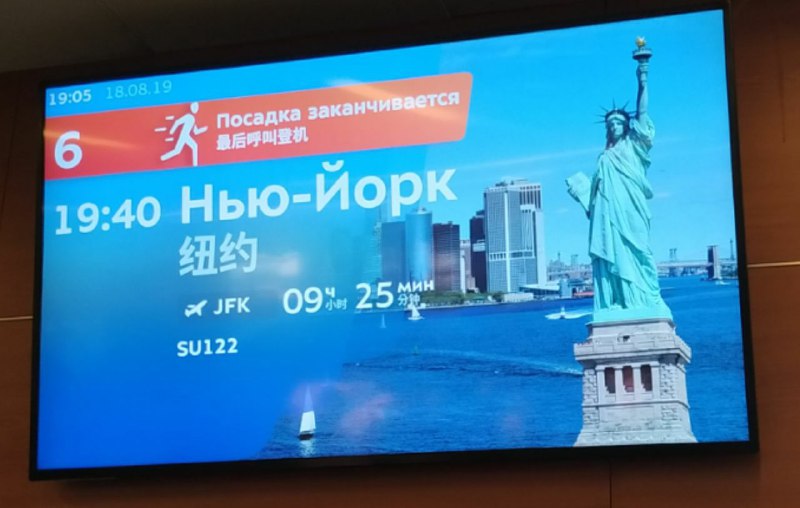
ta-da :)
p.s. something lately they're turning on the "boarding ending" status right at the very beginning of boarding. why do that?
Telegram mirror
Telegram is a messenger where I post short travel notes. This page is a self-hosted backup of that channel.
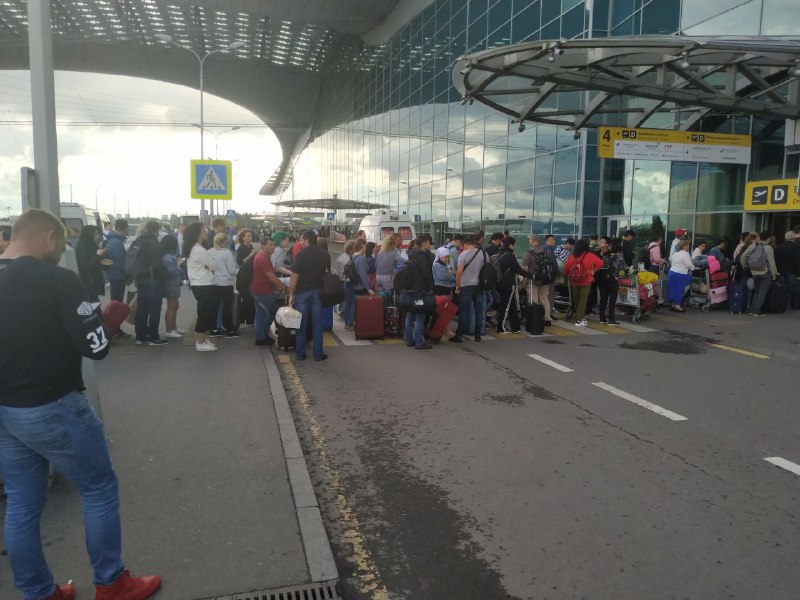
Sheremetyevo is a mess. 20 minute queue just to get into the terminal (!). Another 40 minutes to check baggage. The only thing that went smoothly was getting through border control. And even that was only because I happened to catch a window that had just opened up.
Good thing I arrived with some extra time.
Good thing I arrived with some extra time.
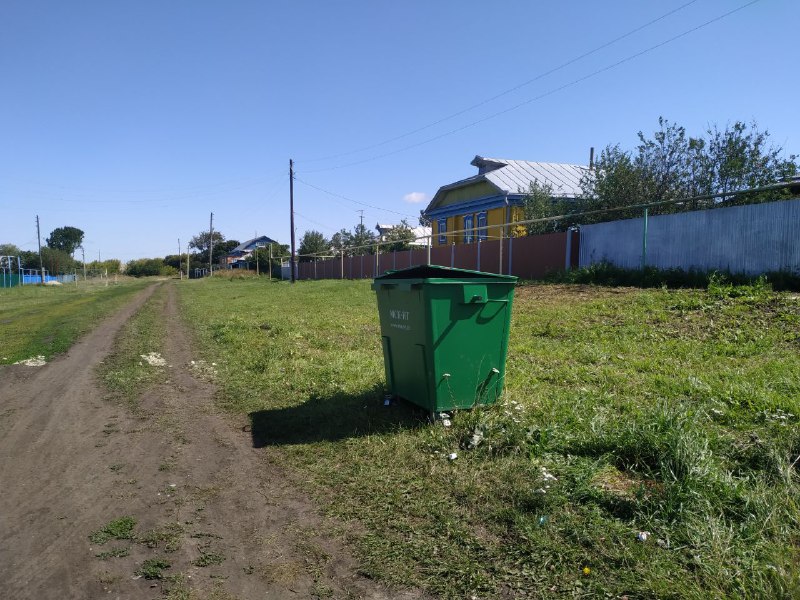
Back in 2018, civilization arrived in the form of centralized garbage disposal.
Before that, there was nothing like it. Apparently, it was expected that residents would haul all their trash to Sergach on their own. In reality, everything that could decompose went into a compost pit on the property, and everything else was hauled to a dump behind the highway, away from the village. Though locals did scavenge some of the waste—old machinery, metals, that sort of thing.
It's interesting to know where they take the garbage now. You'd like to think it's not just being dumped in some bigger pile.
Before that, there was nothing like it. Apparently, it was expected that residents would haul all their trash to Sergach on their own. In reality, everything that could decompose went into a compost pit on the property, and everything else was hauled to a dump behind the highway, away from the village. Though locals did scavenge some of the waste—old machinery, metals, that sort of thing.
It's interesting to know where they take the garbage now. You'd like to think it's not just being dumped in some bigger pile.
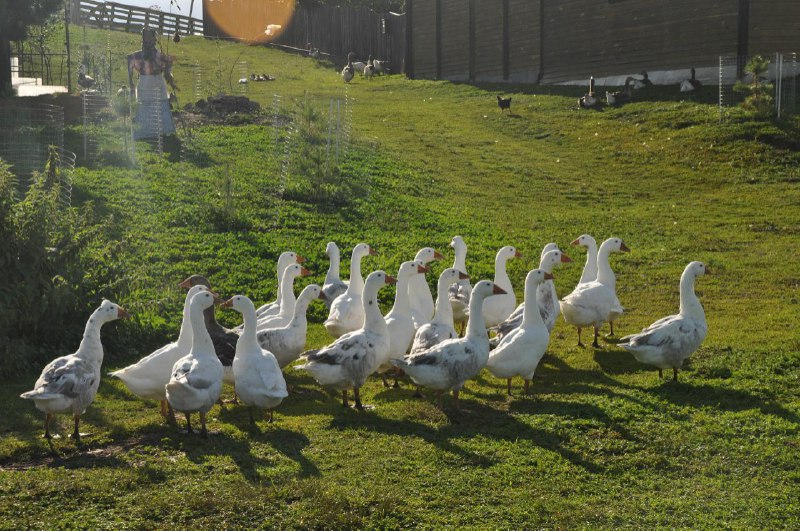
You'd think in a village, everyone would have their own livestock – a cow if not a sheep, or at least some kind of poultry.
But nope. A lot of locals have switched to store-bought products. It's just way easier that way. Hardly anyone keeps cows anymore. Everything comes from the farm.
Sigh, but back when I was a kid, t̶h̶e̶ ̶g̶r̶a̶s̶s̶ ̶w̶a̶s̶ ̶g̶r̶e̶e̶n̶e̶r̶ we'd get fresh warm milk from the neighbors every day in summer (:
But nope. A lot of locals have switched to store-bought products. It's just way easier that way. Hardly anyone keeps cows anymore. Everything comes from the farm.
Sigh, but back when I was a kid, t̶h̶e̶ ̶g̶r̶a̶s̶s̶ ̶w̶a̶s̶ ̶g̶r̶e̶e̶n̶e̶r̶ we'd get fresh warm milk from the neighbors every day in summer (:
Local customs and traditions can be quite interesting in how they differ from city life.
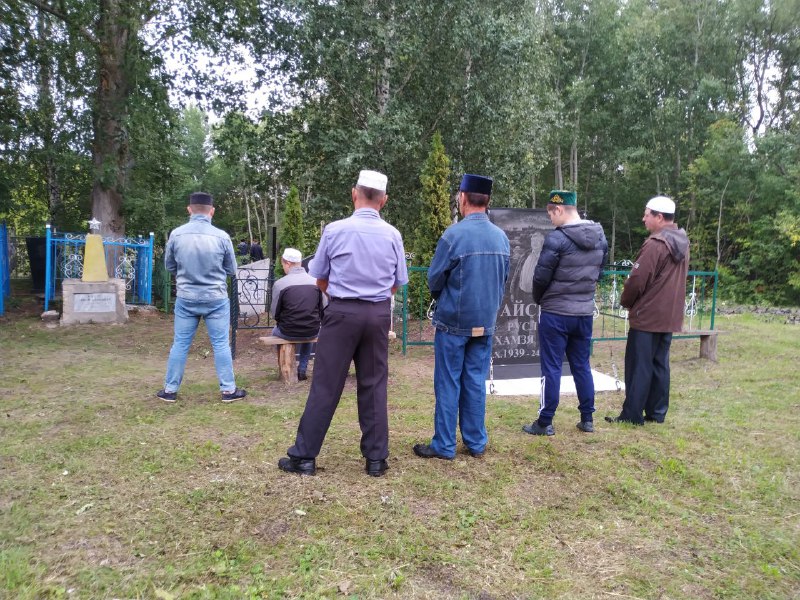
In Moscow, for Eid al-Adha (or other major religious holidays), people simply come to the mosques around 9 in the morning, pray together, and then leave.
In the village, everything starts before 6 in the morning. People gather, pray together, and then go to the cemetery to visit their relatives' graves.
When guests are entertained, dishes are served in an unusual order. In the city, it's always first course, second course, then tea with pastries. Here, they start with sweet tea, then soup and meat.
In Moscow, for Eid al-Adha (or other major religious holidays), people simply come to the mosques around 9 in the morning, pray together, and then leave.
In the village, everything starts before 6 in the morning. People gather, pray together, and then go to the cemetery to visit their relatives' graves.
When guests are entertained, dishes are served in an unusual order. In the city, it's always first course, second course, then tea with pastries. Here, they start with sweet tea, then soup and meat.
A dose of harsh reality.
On my way from Sergach (where the train station is) to the village (25 km), I got chatting with the taxi driver. He tells me that over 3 years, Sergach's population has shrunk from 25,000 to 20,000: the elderly are dying, and young people are leaving.
The only production facility that's somehow holding on is the sugar factory. Everything else has either already collapsed or is on its last breath.
A good salary is considered to be around 15,000 rubles a month. And people are clinging to that money. If someone's lucky enough to get 20-25k, it means working at 150% capacity.
If conditions are tough or they're forced to do extra work, people just endure it. Few are ready to simply write a resignation letter: it's hard to find another job, and nobody wants to starve.
The only ones doing noticeably better are the managing officials of local authorities (who would've thought).
In towns closer to Nizhny Novgorod, things are better: there are still investors from the big city willing to put money in and actually do something. But here it's complete backwoods. There's no interest.
On my way from Sergach (where the train station is) to the village (25 km), I got chatting with the taxi driver. He tells me that over 3 years, Sergach's population has shrunk from 25,000 to 20,000: the elderly are dying, and young people are leaving.
The only production facility that's somehow holding on is the sugar factory. Everything else has either already collapsed or is on its last breath.
A good salary is considered to be around 15,000 rubles a month. And people are clinging to that money. If someone's lucky enough to get 20-25k, it means working at 150% capacity.
If conditions are tough or they're forced to do extra work, people just endure it. Few are ready to simply write a resignation letter: it's hard to find another job, and nobody wants to starve.
The only ones doing noticeably better are the managing officials of local authorities (who would've thought).
In towns closer to Nizhny Novgorod, things are better: there are still investors from the big city willing to put money in and actually do something. But here it's complete backwoods. There's no interest.
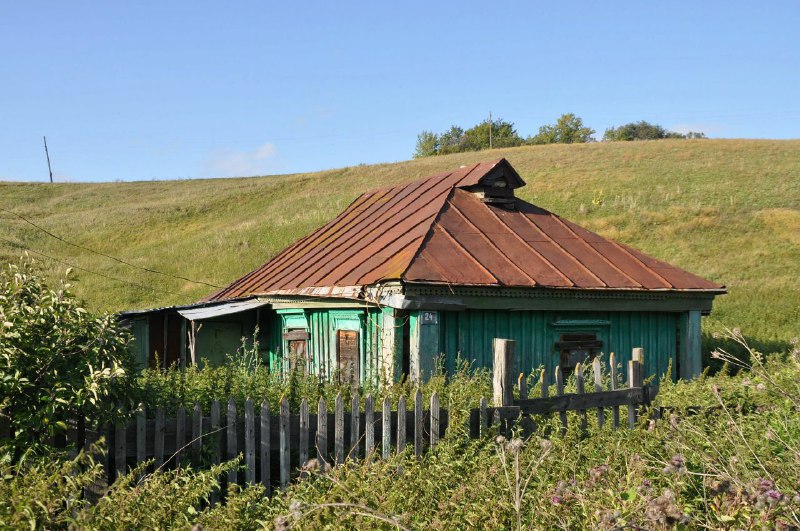
What do you do when a road needs to be repaired but there's not enough money in the budget (or some of it "went missing" along the way)?
Just lay down one lane! Preferably in the middle. And don't remove the old asphalt to save money (that's what you see on the edges).
Just lay down one lane! Preferably in the middle. And don't remove the old asphalt to save money (that's what you see on the edges).
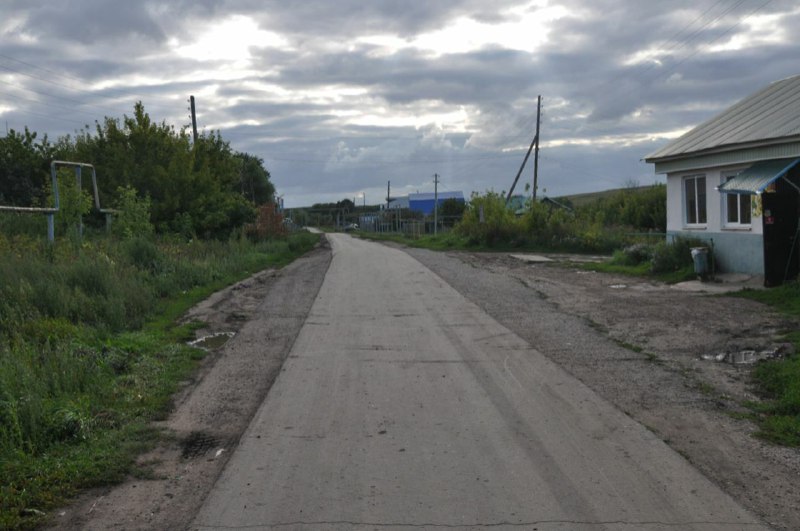
While they're jamming cell service at Moscow protests, let me tell you what it's like just 650km from the capital.
The terrain is hilly with elevation changes of a hundred meters or more. As a result, you can only get a decent signal (== calls + working internet) at the top of a hill. Move 15-20 meters away from the highest point and the internet just disappears. In the valleys, there might be no signal at all. But people live there too.
Your battery drains way faster with this kind of network. Even with the internet turned off.
The same situation isn't just here, but in dozens of villages around the area.
The terrain is hilly with elevation changes of a hundred meters or more. As a result, you can only get a decent signal (== calls + working internet) at the top of a hill. Move 15-20 meters away from the highest point and the internet just disappears. In the valleys, there might be no signal at all. But people live there too.
Your battery drains way faster with this kind of network. Even with the internet turned off.
The same situation isn't just here, but in dozens of villages around the area.
The weather in Moscow has been pretty awful lately. I'm gonna take off for a few days and hope it clears up :)
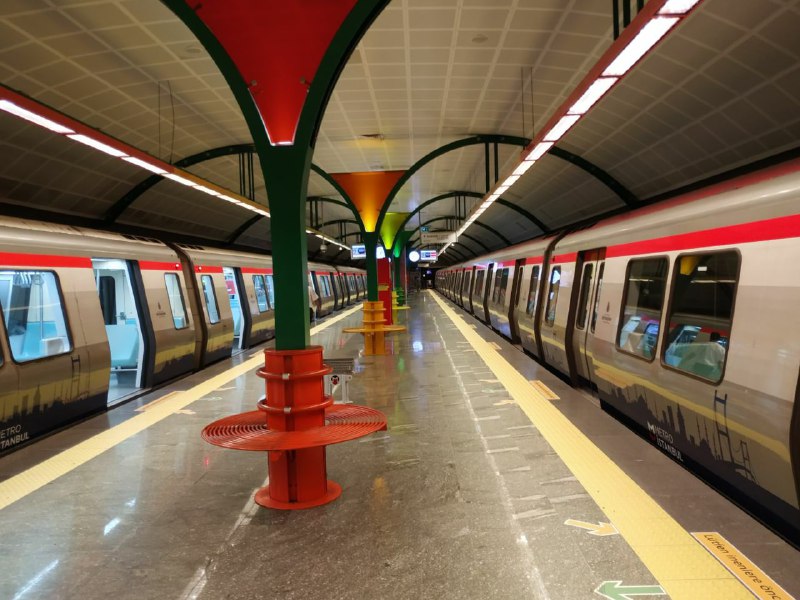
A few years ago, the Turks laid a tunnel along the bottom of the Bosphorus (they didn't dig under the strait, they just ran it like a pipe). Now the European and Asian parts are connected not only by ferries and buses, but also by metro.
On this line, you can really feel the smell of dampness (unpleasant, really). And the fare is 2 times more expensive than on a regular line. But it's fast. Waiting for a ferry takes longer.
On this line, you can really feel the smell of dampness (unpleasant, really). And the fare is 2 times more expensive than on a regular line. But it's fast. Waiting for a ferry takes longer.
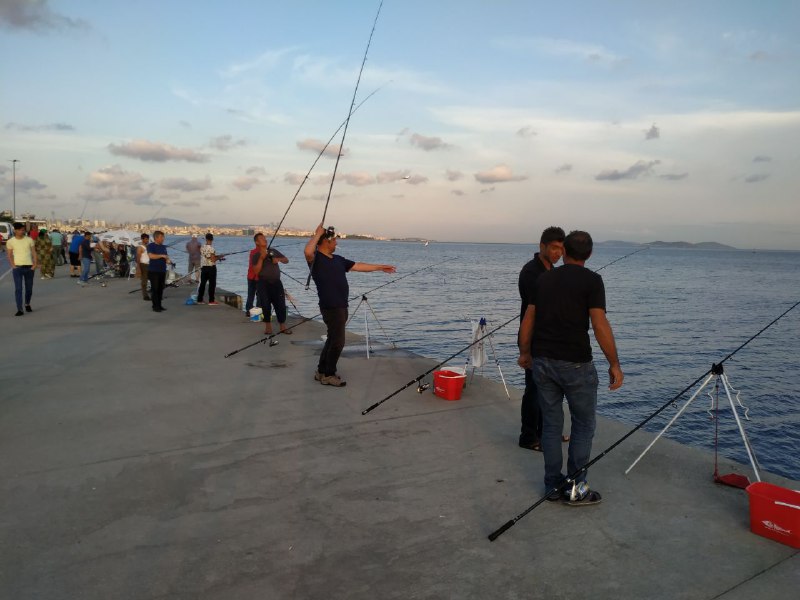
As evening approaches, locals love to head down to the Bosphorus Strait to fish. Surprisingly, many of them actually catch something.
There are so many fishermen that tackle and bait sellers show up too. Why miss out on such a great business opportunity (:
There are so many fishermen that tackle and bait sellers show up too. Why miss out on such a great business opportunity (:
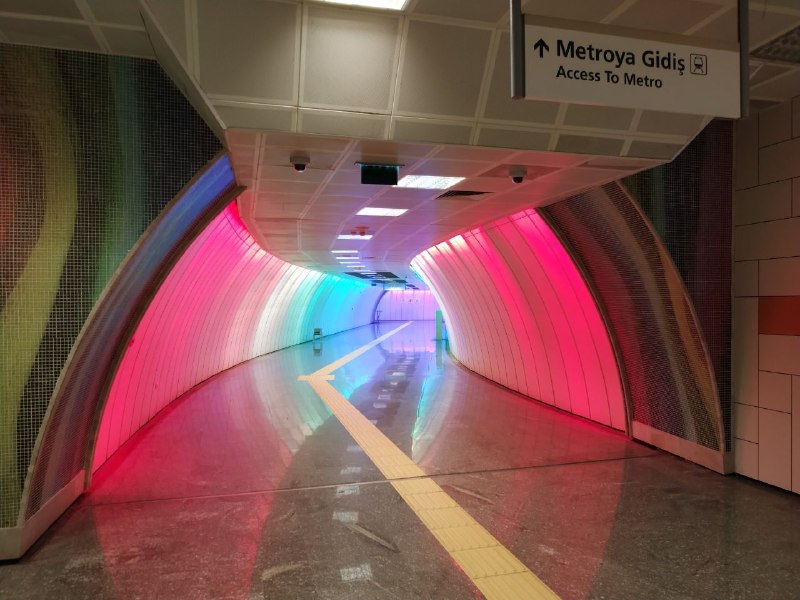
Metro transfer. Well, actually, only on one new line.
Transfers between lines are sometimes paid. A single ticket costs just over 20 rubles, but sometimes you need to make 2-3 transfers and the trip price skyrockets.
Transfers between lines are sometimes paid. A single ticket costs just over 20 rubles, but sometimes you need to make 2-3 transfers and the trip price skyrockets.
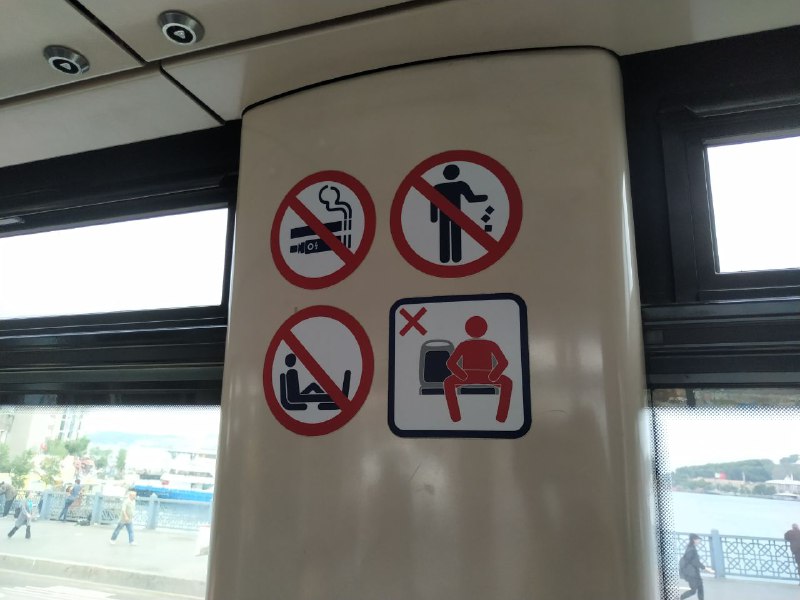
Public transport has a special sign that says you can't spread your legs wide. Moscow could really use more of these sometimes.
The passengers are super polite. I often see people instantly giving up their seats to women (especially those with kids) and elderly folks, without any hints or arguments needed. That's pretty cool.
The passengers are super polite. I often see people instantly giving up their seats to women (especially those with kids) and elderly folks, without any hints or arguments needed. That's pretty cool.
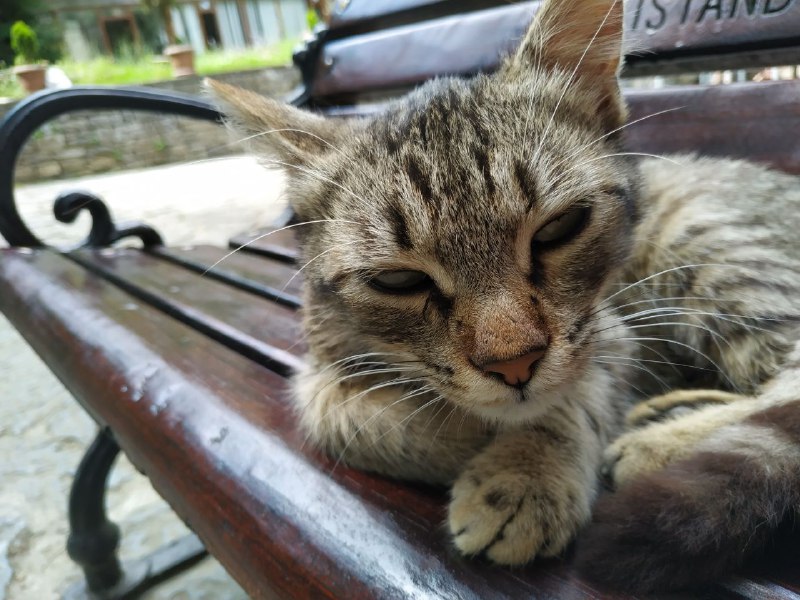
Crowds of cats roam all over the city. Many are not afraid of people at all: they give you hungry looks and beg for food. Especially at outdoor cafes.
By the way, there are also quite a few dogs running around the city. But no matter how many I've seen, they're all calm and chipped. City services keep an eye on them.
Cats on average live 1-2 years in the city. Not least because they become lunch for dogs.
By the way, there are also quite a few dogs running around the city. But no matter how many I've seen, they're all calm and chipped. City services keep an eye on them.
Cats on average live 1-2 years in the city. Not least because they become lunch for dogs.
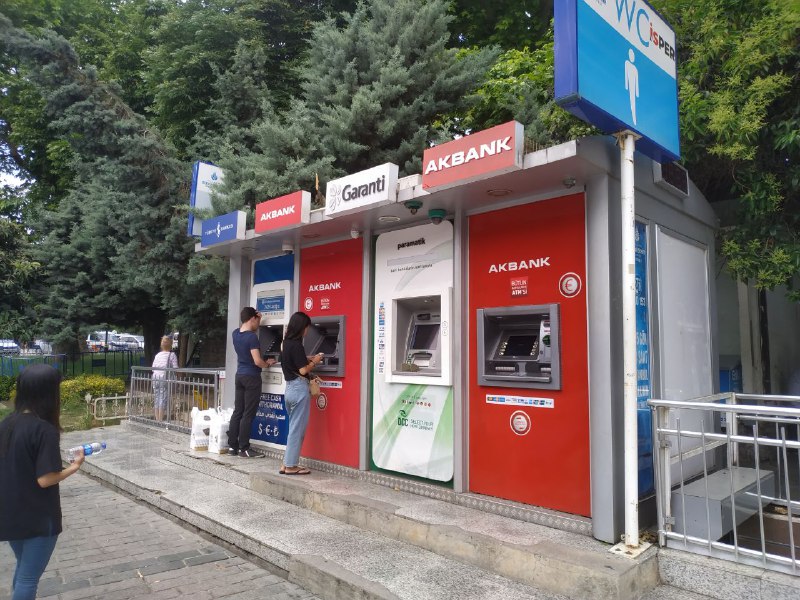
ATMs in Istanbul are a real nightmare. They charge an outrageous 6-7% commission for withdrawing local lira. Plus, they offer their own exchange rate, which is pretty unfavorable.
I was lucky to find a decent Ziraat bank ATM at the airport that didn't charge any commission at all. But those are few and far between – it's easier to find a currency exchange and swap some dollars you've saved up beforehand.
I was lucky to find a decent Ziraat bank ATM at the airport that didn't charge any commission at all. But those are few and far between – it's easier to find a currency exchange and swap some dollars you've saved up beforehand.
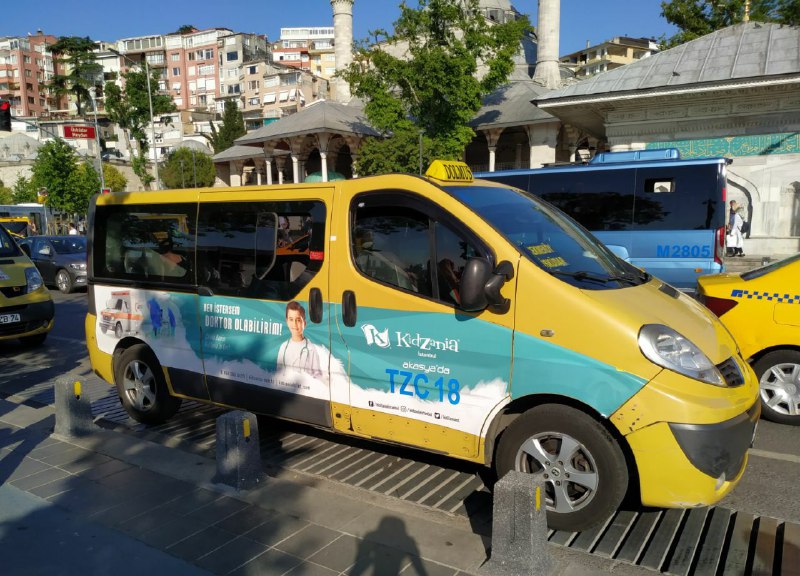
If anyone's feeling nostalgic for Moscow minibuses, they still exist in Istanbul :)
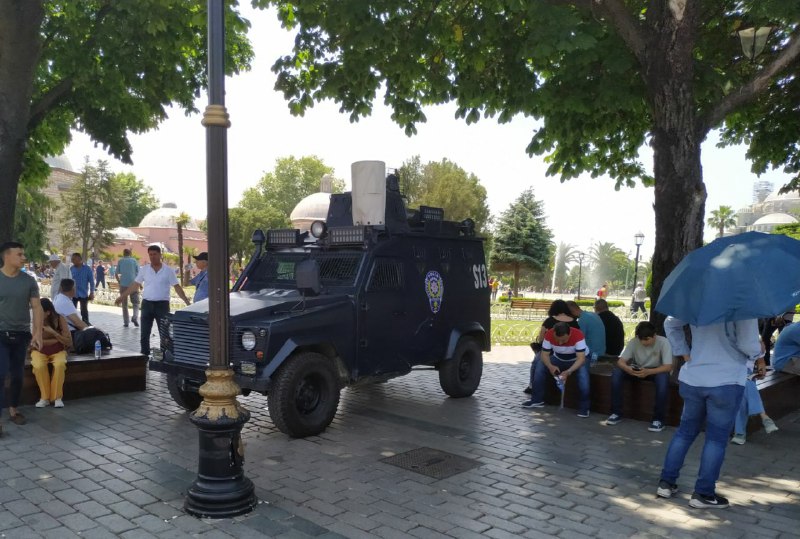
Around squares and open spaces, you can always find intimidating police vehicles, water cannons for dispersing protests, and police barriers. Just in case a crowd suddenly gathers to demonstrate, everything is already prepared. Near Taksim Square, where Turks love to protest, there's even a whole line of police vans parked. All for the people (:
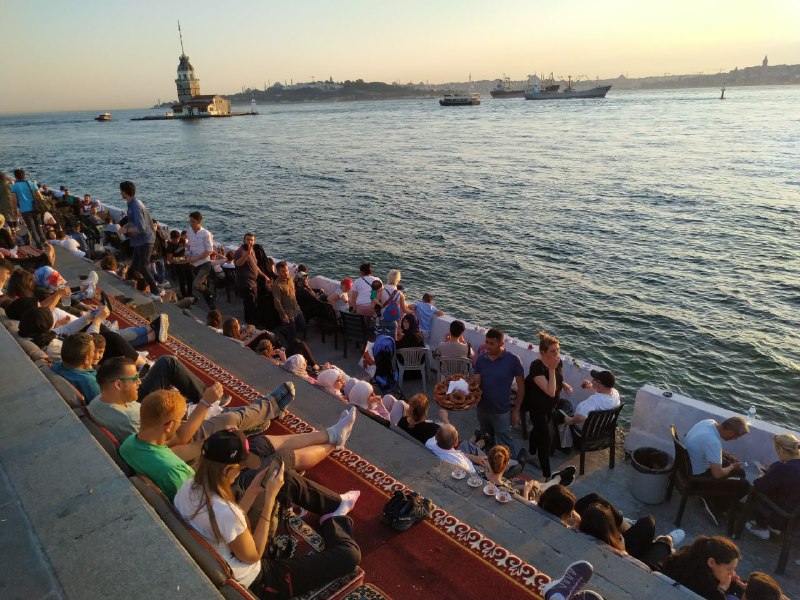
The Healthy Person's Waterfront.
By the way, this is the Asian side of the city. There are barely any tourists here. It's mostly locals hanging out. And there are so many of them. You can barely squeeze through. It's the weekend. Everyone's come out to relax.
By the way, this is the Asian side of the city. There are barely any tourists here. It's mostly locals hanging out. And there are so many of them. You can barely squeeze through. It's the weekend. Everyone's come out to relax.
This is what campaigning for a pro-government candidate looks like. Noticeably fewer people. And mostly women in headscarves.
►
Funny fact about internet censorship: Wikipedia is blocked in Turkey (actually, not just that). But if you replace wikipedia.org with 0wikipedia.org, everything opens up just fine.
Oh, this senseless and relentless war waged by the state against the internet.
Oh, this senseless and relentless war waged by the state against the internet.
Countries
 United Kingdom3
 Serbia100
 Bosnia and Herzegovina54
 Turkey42
 United Arab Emirates3
 Brunei2
 Indonesia12
 Malaysia15
 Argentina16
 USA117
 Morocco5
 Georgia5
 Egypt16
 Hong Kong8
 China4
 Vietnam9
 Tunisia7
 Montenegro9
 Philippines12
 Singapore10
 Oman12
 Algeria12
 North Macedonia5
 Lebanon11
 Israel27
 Albania17
 Russia63
 Tanzania50
 Netherlands7
 Spain14
 Latvia2
 Germany7
 Belgium3
 France27
 Kazakhstan32