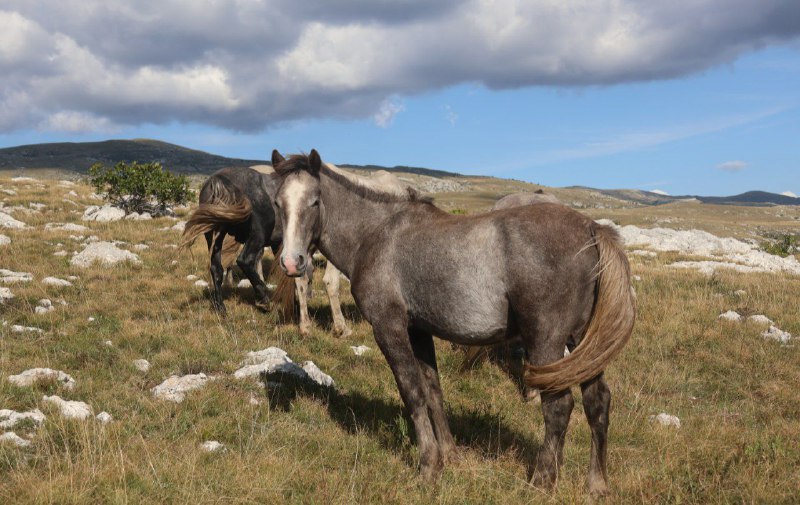
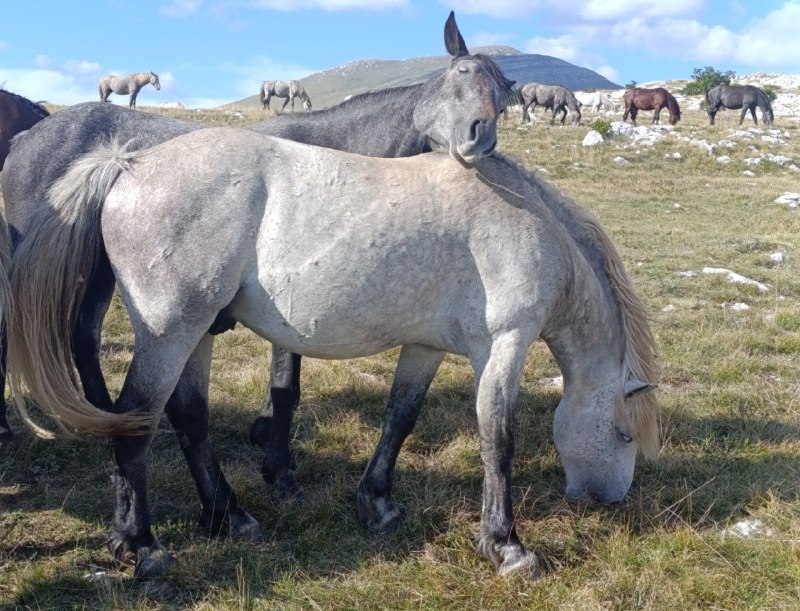
Wild horses live near Livno in Bosnia! I found out about them when I passed through here last year, but only made it back now.
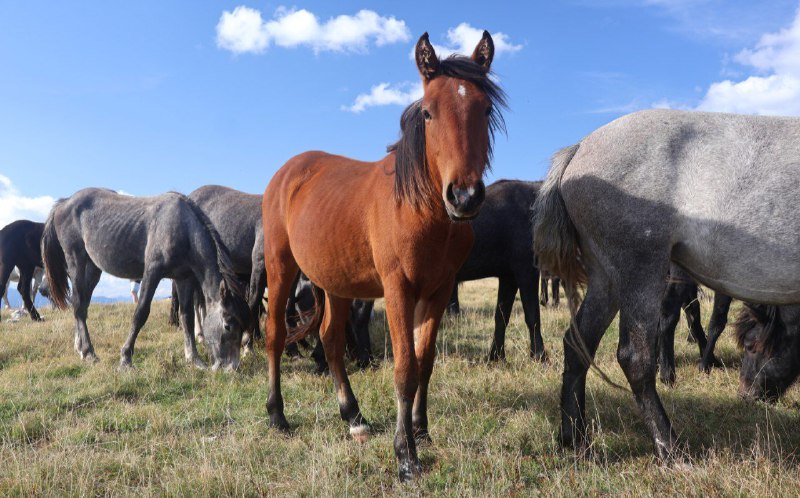
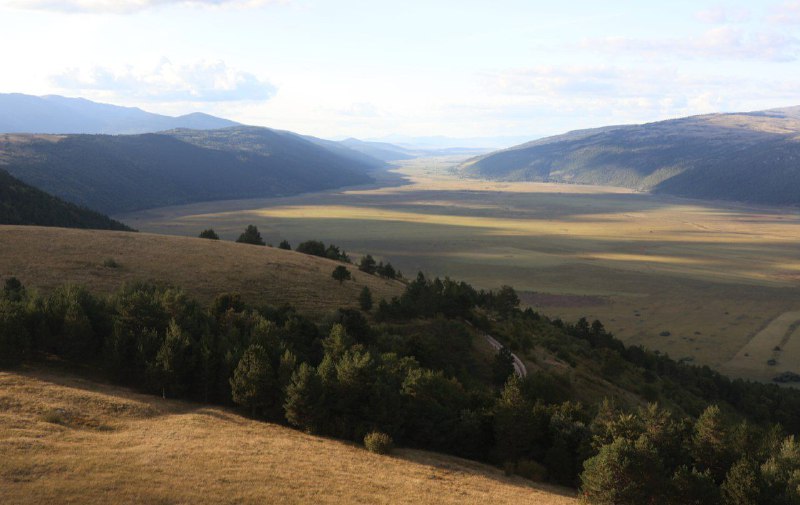
Until the mid-20th century, these horses were domesticated, but then industrialization hit and people no longer needed livestock in such large numbers. The locals of Livno didn't come up with anything better than just letting them all go free. Since then, the wild horse population has only grown, and today there are over 800 of them roaming the surrounding steppes. Fun fact: while reading the Bosnian Wikipedia, I learned that livestock in the local language is measured in "grlice" (throats). They say 800 grlice instead of 800 heads.
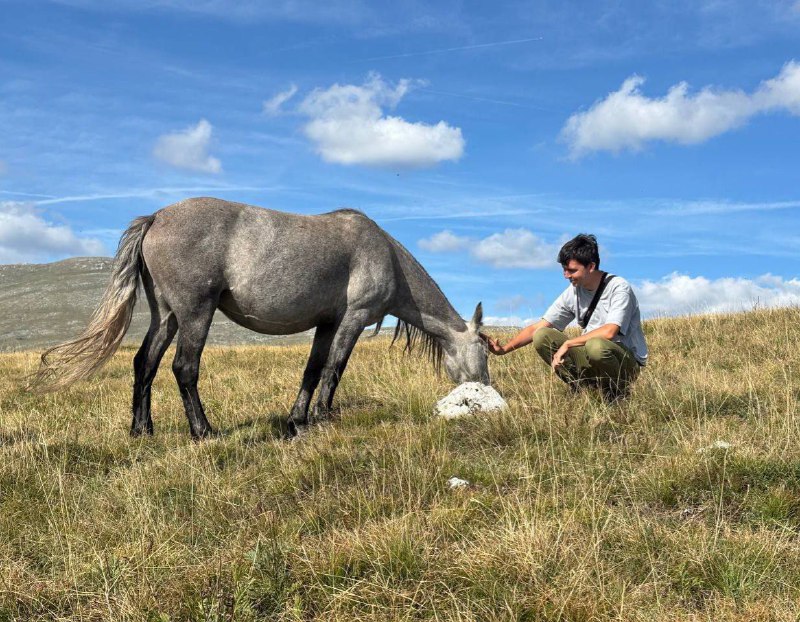
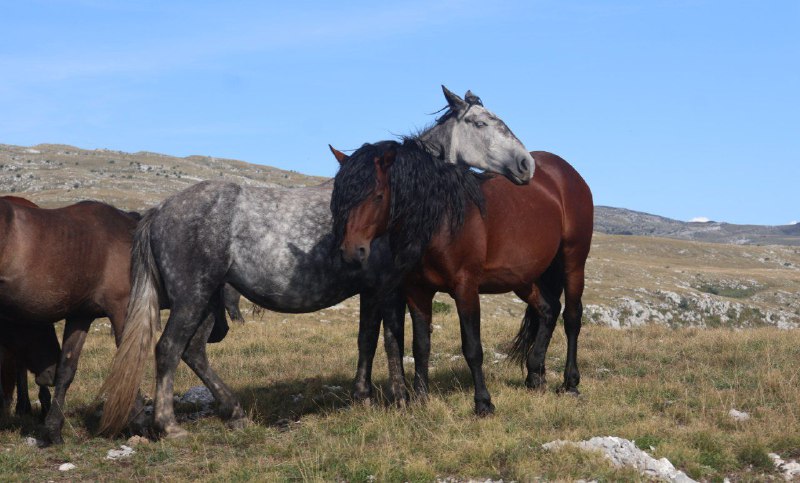
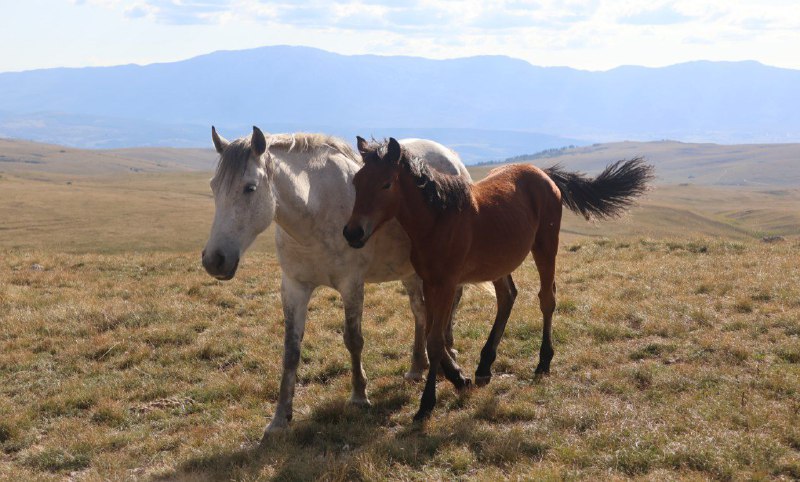
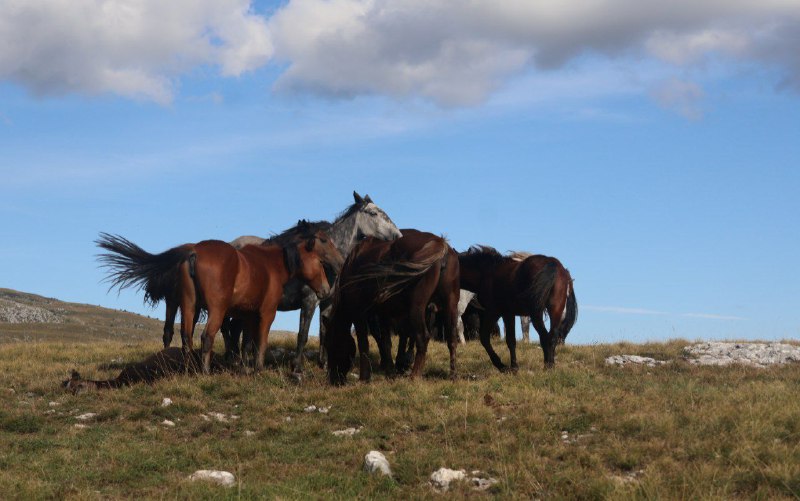
The horses are awesome. You can walk up and interact with them. They're not afraid of people, but they won't let themselves be pushed around either. The animals stand in small groups—family units. There are even family disputes sometimes. During those moments, it's best for people to keep their distance to avoid getting kicked.
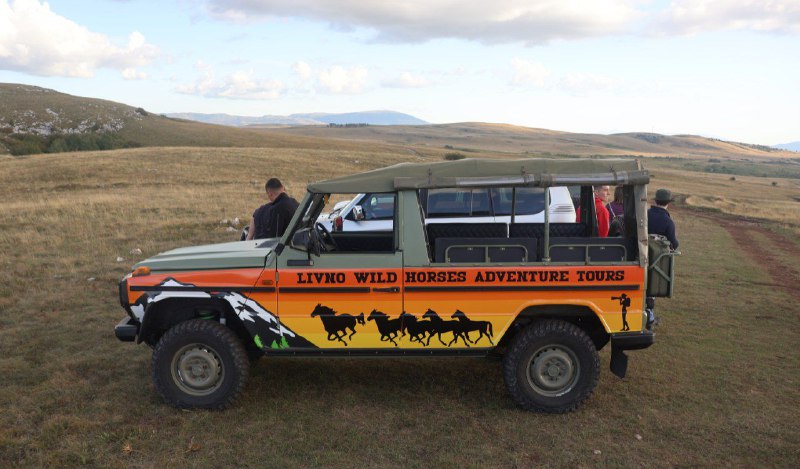
The town has developed a whole "safari" industry. The variety isn't what you'd get in Tanzania, but what can you do? Even locals come to see them. My group included guys from Travnik and a Croatian girl with beautiful tattoo flowers. Actually, spots where horses hang out most often are marked on Google Maps. But there's no guarantee they'll be there. If you go with a guide, they know where and how to search further. Plus, the roads to those spots are terrible. You feel bad for your car.
During especially harsh winters, people try to help the animals. There are entire charitable organizations! And here there are lots of videos from there.
Until the mid-20th century, these horses were domesticated, but then industrialization hit and people no longer needed livestock in such large numbers. The locals of Livno didn't come up with anything better than just letting them all go free. Since then, the wild horse population has only grown, and today there are over 800 of them roaming the surrounding steppes. Fun fact: while reading the Bosnian Wikipedia, I learned that livestock in the local language is measured in "grlice" (throats). They say 800 grlice instead of 800 heads.
The horses are awesome. You can walk up and interact with them. They're not afraid of people, but they won't let themselves be pushed around either. The animals stand in small groups—family units. There are even family disputes sometimes. During those moments, it's best for people to keep their distance to avoid getting kicked.
The town has developed a whole "safari" industry. The variety isn't what you'd get in Tanzania, but what can you do? Even locals come to see them. My group included guys from Travnik and a Croatian girl with beautiful tattoo flowers. Actually, spots where horses hang out most often are marked on Google Maps. But there's no guarantee they'll be there. If you go with a guide, they know where and how to search further. Plus, the roads to those spots are terrible. You feel bad for your car.
During especially harsh winters, people try to help the animals. There are entire charitable organizations! And here there are lots of videos from there.
 United Kingdom
 Serbia
 Bosnia and Herzegovina
 Turkey
 United Arab Emirates
 Brunei
 Indonesia
 Malaysia
 Argentina
 USA
USA Morocco
 Georgia
 Egypt
Egypt Hong Kong
 China
China Vietnam
 Tunisia
 Montenegro
 Philippines
 Singapore
 Oman
Oman Algeria
 North Macedonia
 Lebanon
 Israel
 Albania
 Russia
 Tanzania
 Netherlands
 Spain
Spain Latvia
 Germany
 Belgium
 France
 Kazakhstan